ASI’S SCYTHE ACQUISITION AMPLIFIES AUTONOMOUS OFF-ROAD VEHICLE LEADERSHIP

Read News →

MS4M and ASI Mining Announce Compatibility for Autonomous Mining Fleets

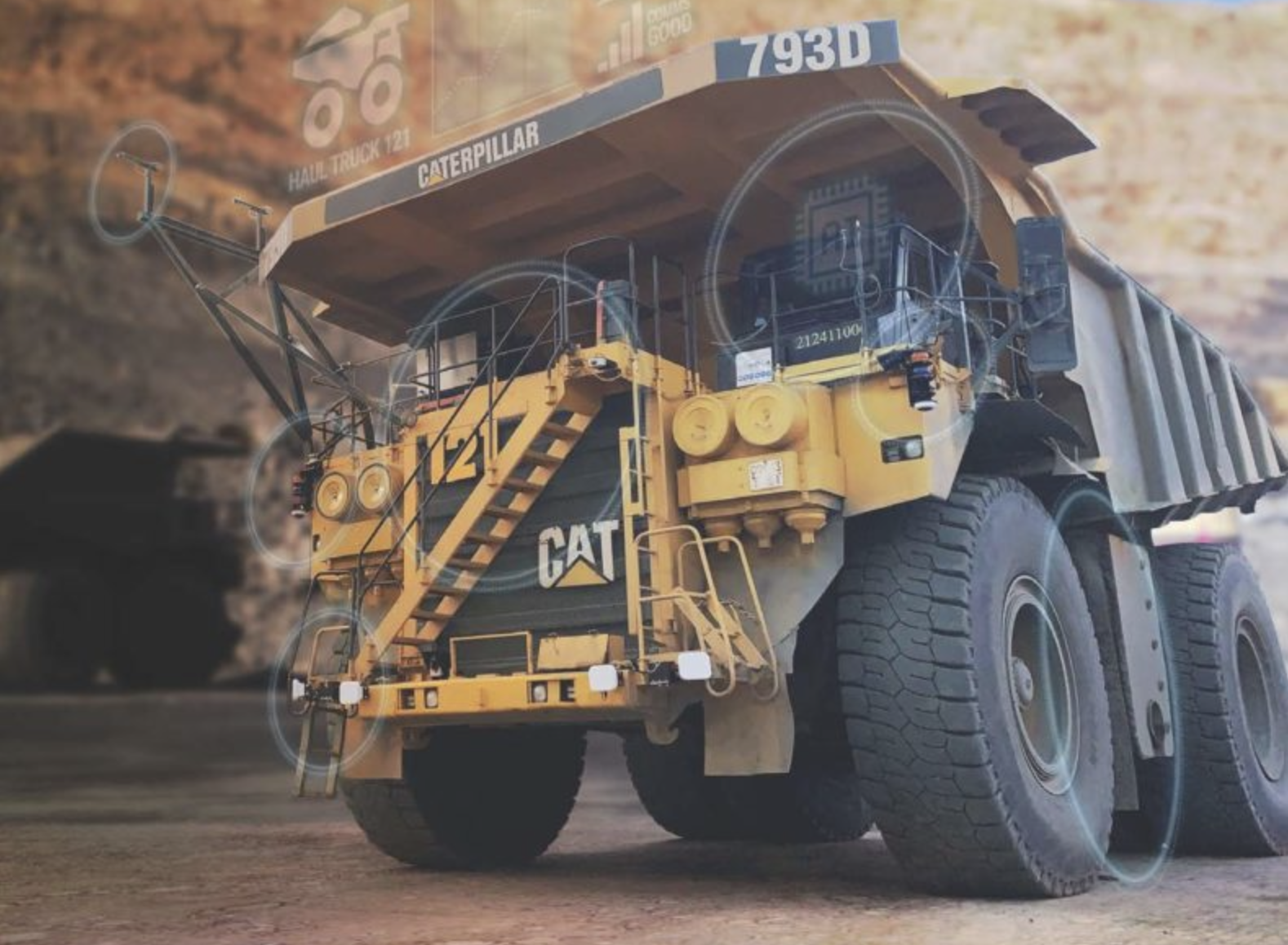
Mendon Utah – ASI Mining and MS4M, a provider of real-time mine management and optimization solutions, have entered into an agreement to ensure compatibility between ASI Mining’s Mobius® Platform and MS4M’s ControlSense® fleet management system (FMS) software for autonomous vehicles.

ASI Mining’s Traffic Management System (TMS) is designed to work with a variety of FMS providers.  This latest compatibility announcement will give existing MS4M users the ability to implement ASI Mining’s Autonomous Haulage System (AHS) using an open FMS/TMS interface. Future MS4M customers will also have assurance of a pathway to AHS by leveraging this same interface.

MS4M’s rapidly expanding client base includes 11 sites worldwide with primary production fleets ranging from 20 to over 100 units. As each of these sites consider future plans for autonomous operations, this interface will play a critical role in their ability to extend the benefits of autonomous functionality using Mobius as an autonomy platform. In addition, mines can further extend functionality via the growing list of Mobius-supported partner OEM vehicles and equipment.

“ASI Mining is pleased to work with MS4M and offer greater interoperability for all MS4M customers wishing to deploy automation solutions without having to replace the FMS, as is common with other AHS providers,” said Drew Larsen, Director of Business Development, ASI Mining.

“We are excited by the opportunity to collaboratively support OEM agnostic solutions that enable the deployment of mixed autonomous fleets within the same operation,” said Wilder Pando, CEO, MS4M. “Integration of our world-class mine management and optimization suite of products with ASI Mining’s traffic management and onboard autonomy will provide mines with a significant degree of flexibility and optionality as automation migration paths are developed and implemented.  Beyond supporting a staged approach in the presence of mixed fleets, this will mitigate the dependency on a single solution provider.”

xASI Mining looks forward to working with MS4M to expand automation options for mine operators seeking to extend their capabilities. This collaboration gives mine operators a robust OEM-independent TMS and FMS combination.

As mining technology matures, an increasing number of mines are seeking ways to automate on their own terms, without the requirement to replace infrastructure or fleets ahead of schedule. Interfaces between systems from ASI Mining and MS4M help make that possible.

Mine operators interested in an OEM-independent approach using solutions from MS4M and ASI Mining can learn more at ASIMining.com.

About ASI Mining / ASI

ASI Mining is partially owned by Epiroc, which acquired 34% of the company in 2018. ASI Mining is recognized for its products and solutions in robotics and autonomous vehicle technology including autonomous haulage, semi-autonomous blasting, drilling, dozing, loading and other applications. In addition to providing solutions for some of the world’s largest mining corporations, ASI Mining is also an automation partner for several global mining vehicle manufacturers. ASI Mining’s majority parent (66% shareholder), Autonomous Solutions, Inc. (ASI) is a world leader in industrial vehicle automation. ASI serves clients across the world in the mining, agriculture, automotive, government, and manufacturing industries with remote control, teleoperation, and fully automated solutions from its headquarters and 100-acre proving ground in northern Utah. Learn more at www.asirobots.com.
ASI Mining Signs Subcontract with Epiroc for Supply of 77 Autonomous Haulage Conversions for Roy Hill Iron Ore Mine

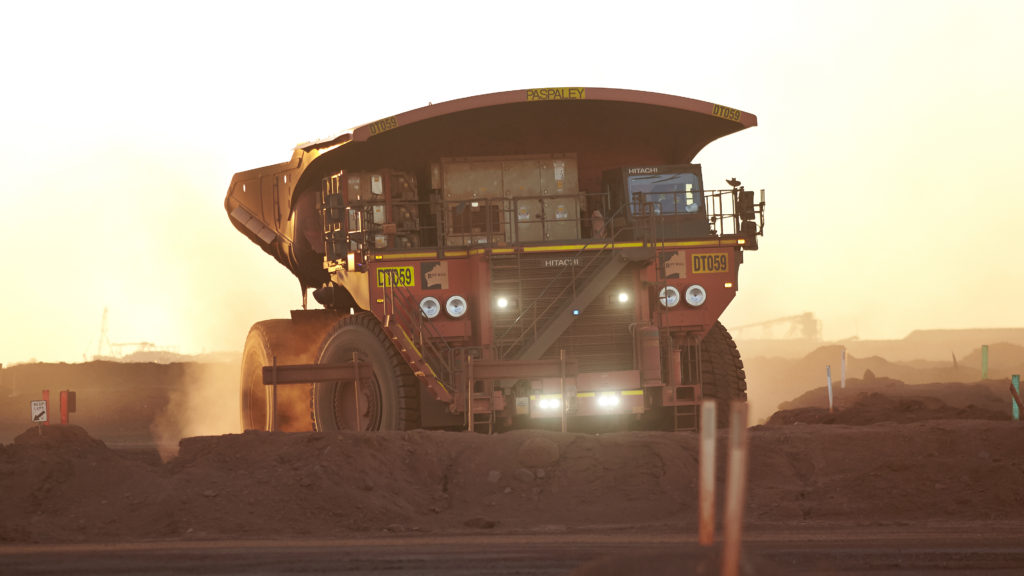
Mendon Utah – ASI Mining has signed a subcontract with Epiroc to supply its autonomous haul truck solution to Roy Hill in Western Australia. This signing follows the recent award by Roy Hill to Epiroc, a global leader in mining equipment and drill automation, as the prime contractor for the project.

For its part, ASI Mining will supply the technology and systems to convert Roy Hill’s mixed fleet of 77 haul trucks from manned to autonomous operation. The project also includes integration with Fleet and other Mining Management Systems. For vehicle conversions to Drive-by-Wire capability, ASI utilizes its partner Danfoss, a major supplier of hydraulics and electronically controlled components for haul trucks, and recognized market-leading supplier of mobile systems to many mining equipment OEMs.

“Being chosen as the technology provider to Roy Hill is a testament that the market is eager to establish a more open and interoperable supplier in the AHS space, especially on retrofits, which will provide more flexibility than the traditional OEM offerings”, said Patrick Hald, General Manager of ASI Mining.

The project will focus on safe and highly productive operations and will leverage ASI’s Mobius™ to achieve an integration platform that can continue to scale for future applications. The project will consist of a phased implementation, with testing and production verification of up to eight trucks undertaken in the initial phase prior to the second phase of full fleet expansion from mid-2021.

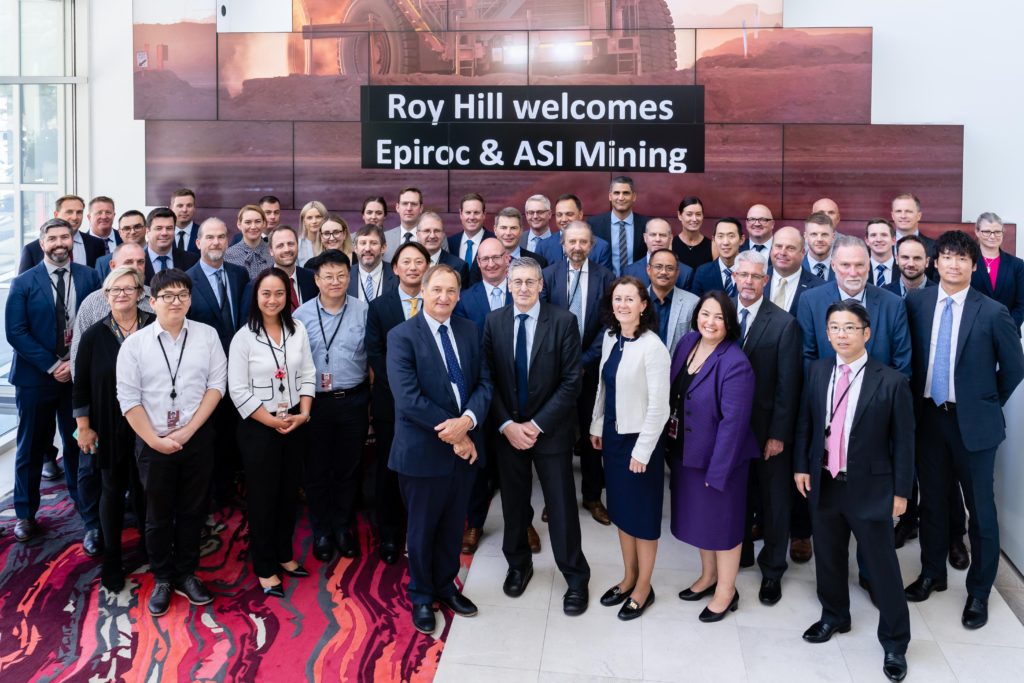
For further information about the project, and images of the signing ceremony, please refer to the joint Roy Hill, Epiroc and ASI Mining media release located here.

About ASI Mining / ASI

ASI Mining is partially owned by Epiroc, which acquired 34% of the company in 2018. ASI Mining is recognized for its products and solutions in robotics and autonomous vehicle technology including autonomous haulage, semi-autonomous blasting, drilling, dozing, loading and other applications. In addition to providing solutions for some of the world’s largest mining corporations, ASI Mining is also an automation partner for several global mining vehicle manufacturers. ASI Mining’s majority parent (66% shareholder), Autonomous Solutions, Inc. (ASI) is a world leader in industrial vehicle automation. ASI serves clients across the world in the mining, agriculture, automotive, government, and manufacturing industries with remote control, teleoperation, and fully automated solutions from its headquarters and 100-acre proving ground in northern Utah. Learn more at www.asirobots.com.
Roy Hill plots new path for end-to-end automation

Roy Hill has signed a contract with Epiroc to deliver their automated haul truck solution.

Leading global mining equipment and services provider Epiroc, in partnership with automation specialist ASI Mining, is set to convert Roy Hill’s mixed fleet of 77 haul trucks from manned to autonomous use.

Epiroc/ASI Mining will meet Roy Hill’s requirements to deliver a safe, interoperable solution for its truck fleet. The solution will have the ability to expand to other mining vehicle types and manufacturers, as well as capability to integrate with existing and future Roy Hill systems. As part of this project Epiroc/ASI Mining will work closely with Hitachi/Wencomine on truck conversion and integration of Roy Hill’s existing Wenco fleet management system.

“Roy Hill is well positioned to transition to automation. Our teams on site and in our Remote Operations Centre (ROC) in Perth have demonstrated a clear capacity to deliver complex projects, sustainable change and operational excellence with the recent success of the autonomous drill program and fleet optimization initiatives. Now is the right time to bring the combined expertise of Roy Hill, Epiroc, ASI Mining and Wenco together to convert our haul truck fleet,” said Roy Hill CEO Mr Barry Fitzgerald.

“Our Chairman, Mrs Gina Rinehart, and our owners Hancock Prospecting, Marubeni, POSCO and China Steel Corporation, have led this project from the start in the interests of staff safety and sustainable productivity. Their vision has set us a challenge to seek out partners who have an aligned tenacity and commitment to bring viable autonomous solutions to the table, and I look forward to realising the significant safety and productivity benefits that will come with this shared goal,” he added.

Roy Hill’s people are at the forefront of the decision to undertake truck automation, with Mr. Fitzgerald confirming safety as a key driver of the project. The commitment to people also extends to the effective transition of impacted operators to other roles. In addition, Mr Fitzgerald anticipated a range of operational benefits including increased productivity of the fleet.

“Care is one of our core values, with safety at the heart of everything we do. Roy Hill’s Smart Mine program is driving innovation across our business, and the automation of our haulage fleet is central to delivering safety and production improvements,” Mr Fitzgerald added.

Having delivered major automation projects across the globe, Epiroc and ASI Mining will bring together a highly credentialled delivery team based in West Australia who will leverage the know-how of a worldwide team of experts.

“Epiroc is proud to collaborate with Roy Hill, ASI Mining and other partners to automate Roy Hill’s haul truck fleet, boosting safety and productivity for a crucial aspect of its mining operation,” says Helena Hedblom, Epiroc’s Senior Executive Vice President Mining and Infrastructure. “This is a very strong example of how automation will take a mining company’s operation to the next level.”

ASI Chief Executive Officer, Mel Torrie, said “ASI Mining is pleased to partner with all key suppliers including mining technology integrator Sedna to deliver an AHS solution at Roy Hill – a world-class major iron ore operation. As a manufacturer-agnostic solutions provider, ASI Mining looks forward to highlighting the opportunities presented by an interoperable approach to autonomous mining.”

Roy Hill has carefully considered the impact of this project on its people, with re-skilling and re-deployment plans to assist operators’ transition to new roles within the business.

“Our people are the driving force behind our success. We are committed to an automation journey that creates an environment in which our people can develop new skills critical to the workforce of the future. Our focus is on setting people up to succeed and further contribute to the Roy Hill community,” Mr Fitzgerald said.

The project will see a phased implementation, with testing and production verification of up to eight trucks undertaken in the initial phase prior to the second phase of full fleet expansion from mid-2021.

About ASI

Autonomous Solutions, Inc. (ASI) is a world leader in industrial vehicle automation. ASI serves clients across the world in the mining, agriculture, automotive, government, and manufacturing industries with remote control, teleoperation, and fully automated solutions from its headquarters and 100-acre proving ground in northern Utah.

ASI improves algorithm to detect drop-offs and other large negative obstacles

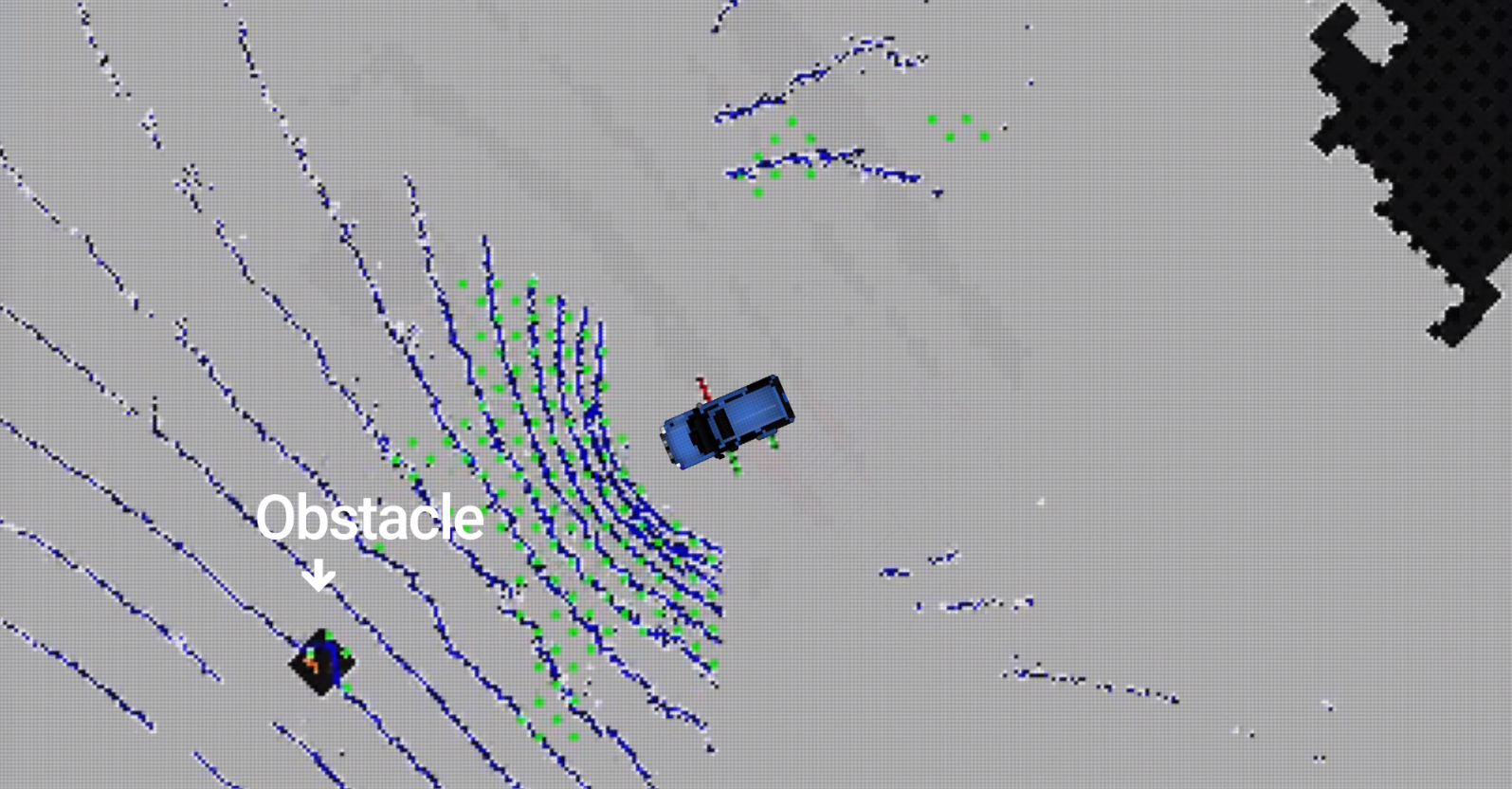
Autonomous Solutions, Inc. (ASI) has improved an algorithm for autonomous vehicles to detect drop-offs and other large negative obstacles often found in the environments in which automated off-road vehicles operate.

“ASI has developed a method for mapping point cloud occlusions in real-time,” said Taylor Bybee, Perception Tech Lead at ASI. “Which provides additional accuracy and safety when integrated into an autonomous vehicle obstacle detection and avoidance system.”

For safe navigation through an environment, autonomous ground vehicles rely on sensor data representing 3D space surrounding the vehicle. Often this data is obscured by objects or terrain, producing gaps in the sensor field of view. These gaps, or occlusions, can indicate the presence of obstacles, negative obstacles, or rough terrain.

Occlusions can be defined as a blockage which prevents a sensor from gathering data in a location. For example, occlusions can be seen as shadows in LiDAR data.

Because sensors receive no data in these occlusions, sensor data provides no explicit information about what might be found in the occluded areas. Information about the occlusions must be inferred from using an occlusion mapping algorithm to provide the navigation system with a more complete model of the environment.

“While sensor data itself doesn’t tell us what’s in the occluded areas, occlusions can represent negative obstacles like drop-offs or areas behind large obstacles,” said Jeff Ferrin, CTO at ASI. “It’s important to identify these areas for obstacle detection and avoidance to work properly.”

Application of this new technology can be useful in settings with dump edges at mine sites, steep road edges, canals, ditches, hills or stairs for indoor or urban environments.

The occlusion mapping algorithm has three main components.

The first is a sensor field of view (FOV) model that describes what obstacles the sensors are expected to detect. This component is designed for point cloud sensors such as 3D LiDAR, Flash LiDAR, Structured Light, and Stereo Cameras.

Second, an occlusion map is maintained and updated using the sensor FOV model and current sensor data to provide a probabilistic estimate on areas that have not been detected within the sensor FOV.

The third component is the integration of the occlusion map into an autonomous vehicle navigation system. It is designed to work with and complement existing obstacle detection and avoidance systems.

About ASI

Autonomous Solutions, Inc. (ASI) is a world leader in industrial vehicle automation. ASI serves clients across the world in the mining, agriculture, automotive, government, and manufacturing industries with remote control, teleoperation, and fully automated solutions from its headquarters and 100-acre proving ground in northern Utah.

Autonomous Solutions, Inc. (ASI) receives SBIR funding for Deep Learning architecture to support multiple sensors in GPS-denied environments


Autonomous Solutions, Inc. (ASI) has been awarded a SBIR Phase I grant from the U.S. Army Combat Capabilities Development Command Ground Vehicles Systems Center (formerly TARDEC) to develop a Deep Learning (DL) architecture that will support sensor fusion in environments with limited, or no, GPS.

“Environmental sensing today typically includes cameras, LiDAR and radar,” said Jeff Ferrin, CTO of ASI. “Each of these devices has a specific purpose, but not all of them work well in every situation. For example, cameras are great at collecting high-resolution color information, but do not provide much useful information in the dark.”

In addition to the challenges faced by cameras in poorly lit or degraded visual environments, LiDAR and radar sensors also have limitations. LiDAR performs well in most light conditions but may yield false positives in heavy rain, fog, snow or dust, due to its use of light spectrum wavelengths. Radar usually penetrates these degraded visual environments, but often lacks spatial resolution.

“ASI’s goal is to design a deep learning architecture that fuses information from LiDAR, radar and cameras,” said Ferrin. “We plan to build upon machine learning techniques we have already developed for LiDAR data.”

Deep learning is a branch of artificial intelligence and machine learning that allows valuable information to be extracted from large volumes of data. Cameras are often used in deep learning models because of their high output of information in regularly sampled data structures.

The case is different for LiDAR and radar. Naturally, these two sensor types do not provide regularly sampled data, making it difficult to formulate problems using current deep learning frameworks. This gap in current research efforts – deep learning for LiDAR and radar – is the focus of this grant.

Improved utilization of data from multiple devices can paint a more accurate picture of a vehicle’s surroundings, keeping it safer and making it more efficient. The details of the grant solicitation state, “It is anticipated that harnessing a wide variety of sensors altogether will benefit the autonomous vehicles by providing a more general and robust self-driving system, especially for navigating in different types of challenging weather, environments, road conditions and traffic.”

“In the last few years, we have seen a growing need in the world of robotics to advance industry capabilities in machine learning, deep learning, and other artificial intelligence algorithms to improve performance in these challenging environments,” said Ferrin.

ASI is required to demonstrate the feasibility of the deep learning architecture in a simulation environment, including a road following system that controls an autonomous vehicle, on a course with obstacles and a degraded visual environment.

About ASI

Autonomous Solutions, Inc. (ASI) is a world leader in industrial vehicle automation. ASI serves clients across the world in the mining, agriculture, automotive, government, and manufacturing industries with remote control, teleoperation, and fully automated solutions from its headquarters and 100-acre proving ground in northern Utah.

To learn more about ASI’s work with sensor fusion technology, visit the company’s Research and Development page.