

[row disablegap=”true”]
[col size=”double”]

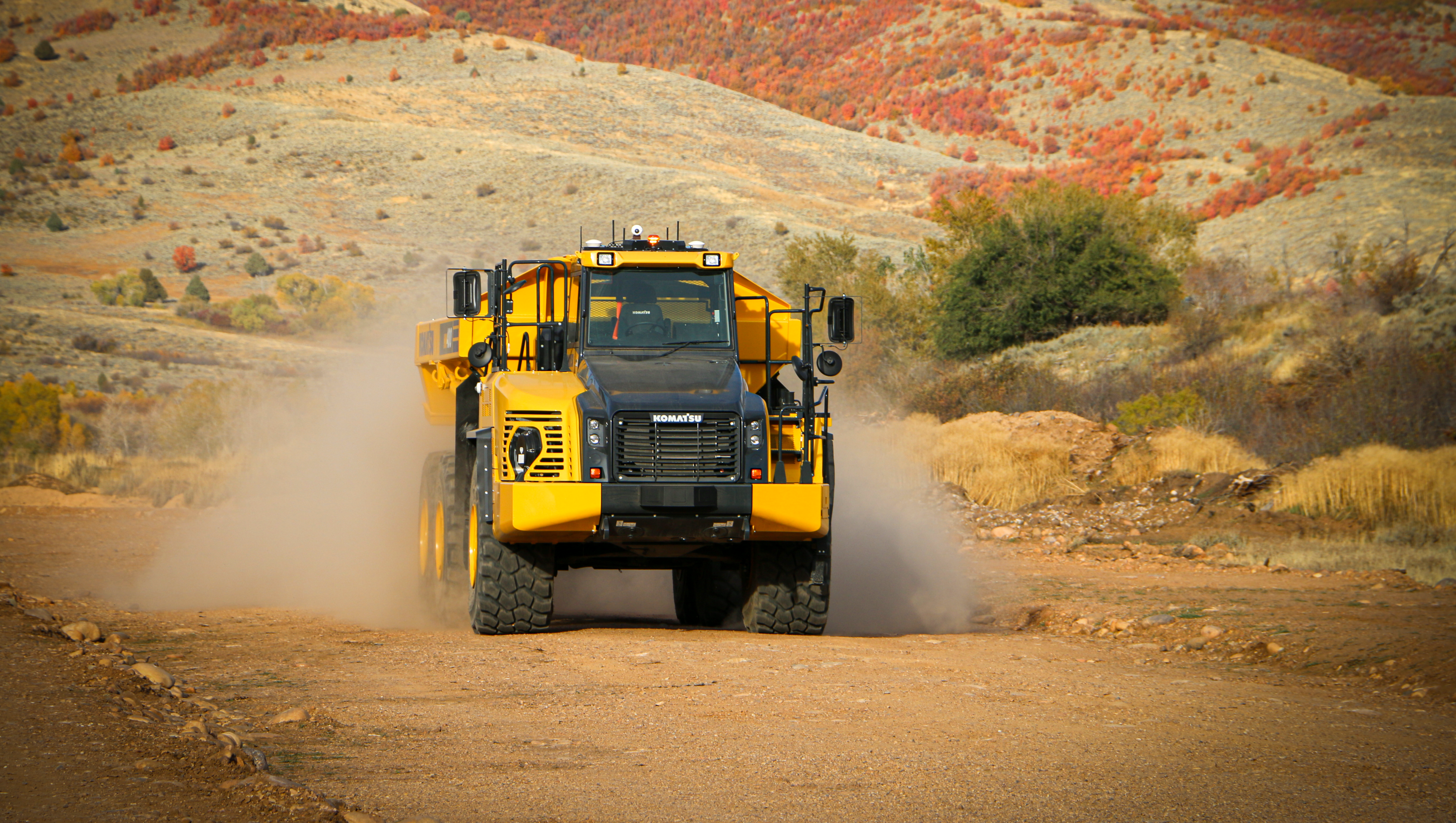
ASI’s automation technology is OEM agnostic, making it very attractive to mining and farming operations with fleets made up of several different vehicle makes and models.
[/col]
[col]
By nature, many business-to-business interactions require extensive due diligence before companies commit to a large scale purchase. We typically interact with our customers across a sales cycle of 3-12 months. During this due diligence phase, one of the topics that often comes up is: How does ASI stack up to other vehicle automation solutions in the industry?
Our hope is that the following two articles, The ASI Advantage, Part I & II, will help answer this important question.
We generally see competition from two sources: OEMs and mid-sized robotics companies.
First up are original equipment manufacturers (OEM) that offer their own automation solution. OEMs specialize in manufacturing and economies of scale.
[/col]
[col]
Once a new product or feature is proven and engineered for assembly on the production floor, OEMs add it to their product offering. The drawback is that this process takes so long that OEMs may be limited on the automation solutions they provide.
For example, we recently had a discussion with an OEM that has a competing automation solution for one vehicle model, but they wanted to explore using our products to supply automation solutions for their other vehicle lines.
For example, we recently had a discussion with an OEM that has a competing automation solution for one vehicle model, but they wanted to explore using our products to supply automation solutions for their other vehicle lines.
[/col]
[/row]
[row]
[more]
[col]
Technologies engineered for production may also be inflexible. Due to this, OEMs are generally not the best option for end users looking for a highly customized solution. End users, and even OEMs, on the hunt for custom solutions should look to smaller, more versatile companies—like ASI—that are set up to manage custom requests.
[/col]
[col]
Another challenge that end users face with OEMs is fleet exclusivity. Because of the sheer amount of capital it takes to produce large equipment, OEMs are generally large organizations, few in number, and often seek to guarantee business by signing end users into exclusive fleet contracts.
Fleet agreements may grant access to technologies like vehicle autonomy, but also may expose end users to higher maintenance fees, forced upgrades, and other embedded costs.
[/col]
[col]
We spoke to one representative from a major mining company who said they would rather partner with a smaller company like ASI for automation solutions than to rely on OEMs. By choosing third party technology providers, their company would have the flexibility to choose whatever vehicle make they want and keep their OEMs contracts in check.
[/col]
[col]
In short, ASI stacks up very well with OEMs that offer similar automation solutions. We find that end users are often looking for custom solutions for specific problems and greater contractual flexibility. Our universal automation capabilities are attractive to end users that run multiple vehicle makes and models at their operation and to OEMs that want to offer a full range of autonomous vehicles to their customers.
Whatever their purpose in coming to us, we feel confident in our ability to provide a simple and safe automation solutions to all our customers.
[/col]
[/more]
[/row]
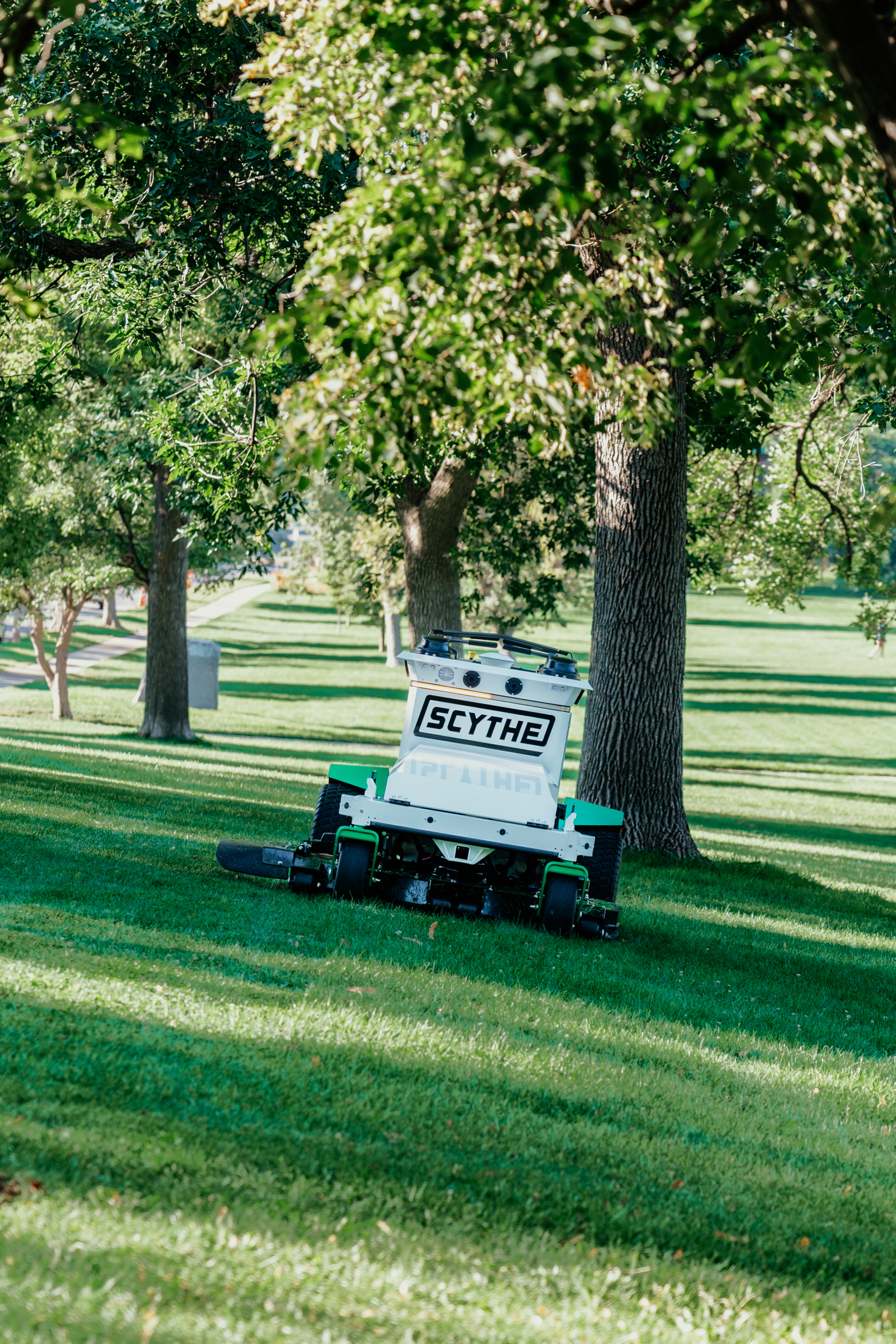
Deal brings Scythe Sight® AI vision and M.52 into ASI’s Mobius®-powered portfolio, accelerating sustainable outdoor care Mendon, UT – March 11, 2026: Autonomous Solutions, Inc. (ASI), the worldwide leader of industrial vehicle automation and developer of the Mobius autonomous fleet management system, announces the acquisition of Scythe Robotics, the Colorado-based developer of advanced, commercial-grade autonomous […]

Screening Within the 10th Annual Churros4Change Features Innova and Beeline Collaboration of Bringing Mobility with Robotic Wheelchairs to Guatemala
October 21-23 Event Features Full Fleet Brand Agnostic Autonomy to Offset Labor Shortages and Optimize Productivity for Future Farming

July 30th Ribbon Cutting a Milestone Moment for Autonomous Solutions, Inc. and Its Ever-growing US Footprint

Powered by 25 Years of Expertise, ASI’s Team Builds a Future Where People and Machines Work Smarter Together
Utah-Based “People-Building Robot Company” Employer’s Honor Comes on the Heels of ASI’s Global Expansion and Hiring for UT and TX Locations
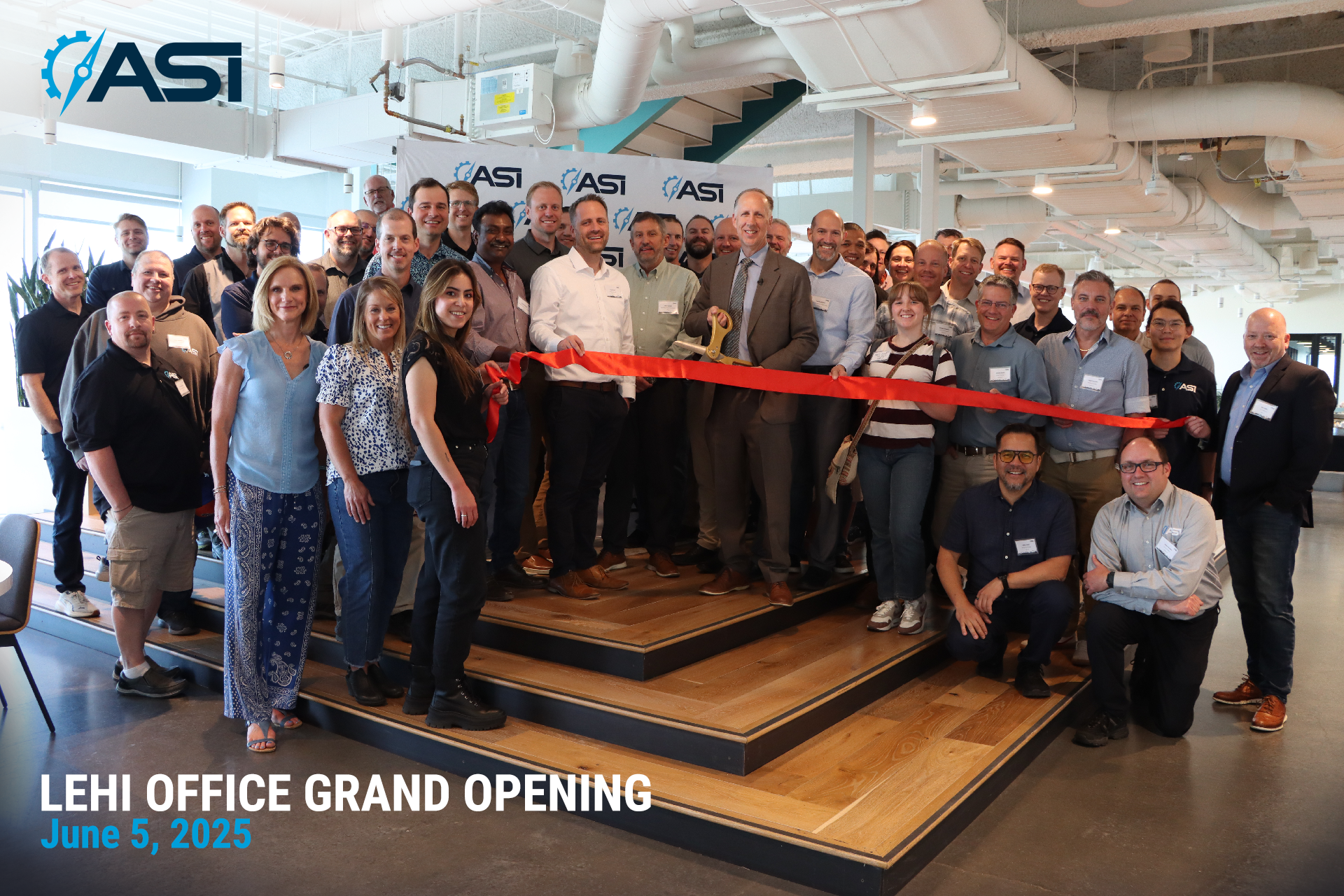
June 5th Ribbon Cutting Exemplifies the Rapid Technology Expansion of Autonomous Solutions, Inc. Within US

ASI expands its Utah presence, leasing WeWork’s largest space at Innovation Pointe
ASI Heavy Construction Will Operate a Fleet of Autonomous Vehicles Using Mobius™ for US-Based Project

Autonomous Solutions, Inc. (ASI) announced that it is shifting its Automotive team from OEM proving ground automation to support its agriculture, construction, landscaping, and logistics sectors. This transition follows the divestiture of ASI Mining, with the capital from the sale enabling a significant expansion in customer deployments. The Automotive team’s expertise in simulation, test automation, […]

Mendon, Utah: Autonomous Solutions, Inc. (“ASI”), a pioneer in the automation of industrial vehicle systems, is pleased to announce the sale of business unit, ASI Mining to Epiroc, a world leader in mining equipment and solutions. Epiroc acquired a 34% stake in ASI Mining in 2018 and will now take full ownership of the company. […]

Along side a world-leading OEM. ASI has developed autonomous technology capable of choreographed testing of ADAS/AV systems. We call this technology SWARMING. Based on studies such as those done by NHTSA, OEMs are finding that using simulation to test, validate, and verify ADAS/AV systems simply isn’t enough. There is a large frequently unaddressed gap in ensuring these vehicles are […]

Autonomous yard shifting uses trucks from different OEMs to perform daily tasks and routines without the need for a driver in the cab. As a result, it offers the ability to oversee and control operations of multiple trucks from a control room onsite, or thousands of miles away. The industry’s most capable and proven command […]

New architecture to increase situational awareness and safety in GPS-compromised environments. [Mendon, UT] Autonomous Solutions, Inc. (ASI) has been awarded a Phase Two grant from the U.S. Army Combat Capabilities Development Command Ground Vehicles Systems Center (formerly TARDEC). Based on the progress achieved during Phase One, ASI was chosen to continue development of a Deep […]
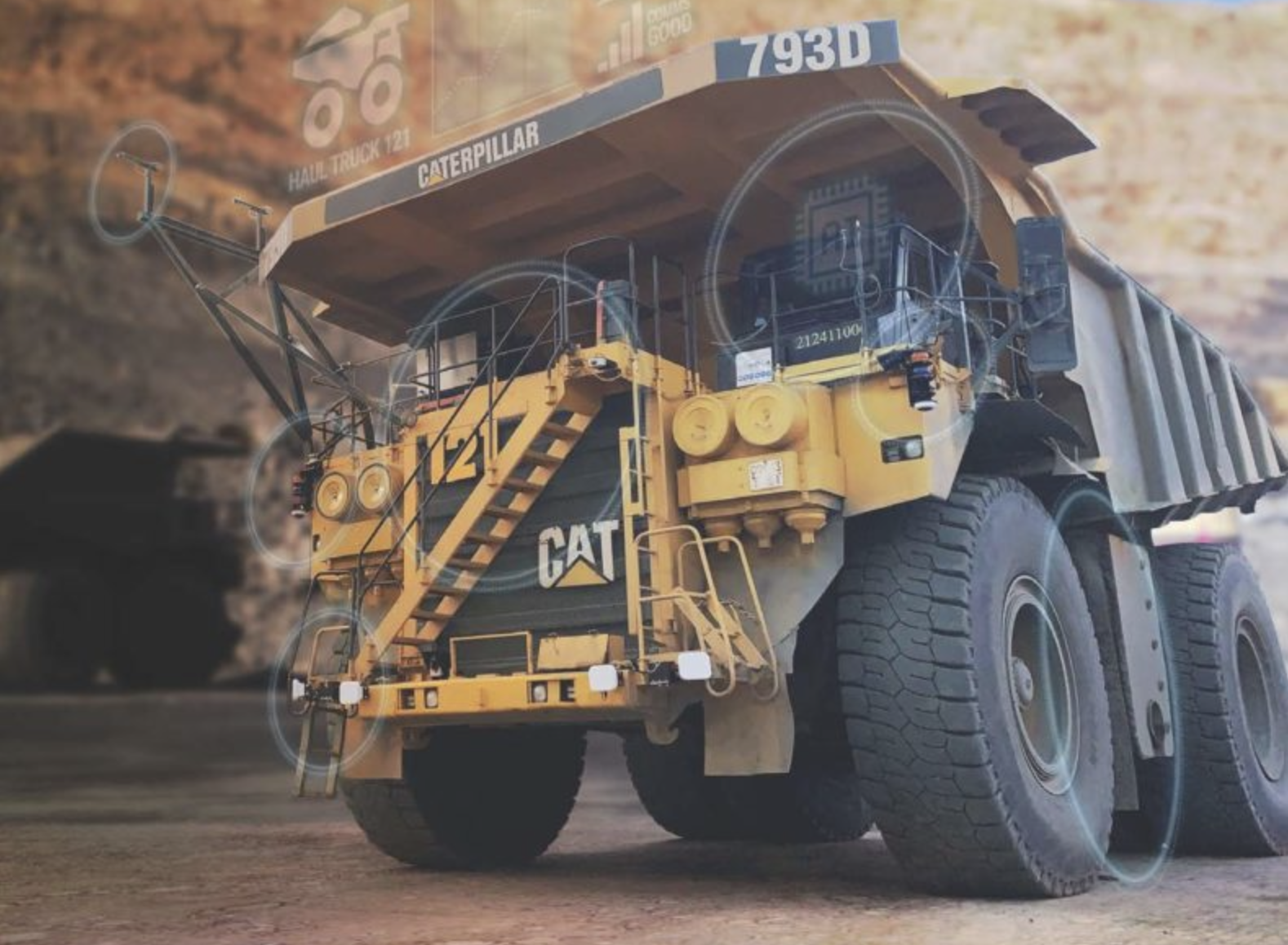
Mendon Utah – ASI Mining and MS4M, a provider of real-time mine management and optimization solutions, have entered into an agreement to ensure compatibility between ASI Mining’s Mobius® Platform and MS4M’s ControlSense® fleet management system (FMS) software for autonomous vehicles. ASI Mining’s Traffic Management System (TMS) is designed to work with a variety of FMS […]

Schedule a demo to see our autonomous solutions in action
Steadfast automation, where and when you need it, is the cornerstone of what ASI provides. From law enforcement to industrial solutions, robotics cannot be a force multiplier without this level of command and control.

Brian Higgins
Group 77


