
01 Executive Summary
Industrial leaders know autonomy is coming; the real question is how to make it safe, profitable, and scalable in the messy reality of mines, yards, ports, farms, and factories.
For over 25 years, our team has moved autonomous off-road vehicles from lab demos to a 24/7, 300-vehicle ecosystem at one of the world’s largest iron ore mines, and from there into distribution yards and other high-utilization environments. This white paper distills those “bloody lessons,” as I like to call them, into a practical playbook for CEOs and operations leaders who are serious about implementing autonomy across large off-road fleets.
Three themes cut through everything ASI has learned:
Autonomy only pays where utilization and labor cost are high enough to justify the investment.
Safety is non-negotiable and must be engineered at the system level, not bolted on to individual machines.
Culture, change management, and trust determine whether the last 10% of performance ever arrives in the field.
If you run or influence large fleets of off-road vehicles, this paper is designed to help you move from curiosity to a clear pathway for pilot, scale-up, and long-term advantage.
02 Why Off-Road Autonomy Now
Off-road autonomy has quietly reached maturity in some of the toughest operating environments on earth. Mining operations, for example, now run fleets of autonomous haul trucks and auxiliary vehicles around the clock, moving millions of tons of material with productivity that meets or beats human benchmarks.
At the same time, industries such as heavy construction, logistics, agriculture, and landscaping face converging pressures: critical labor shortages, rising safety expectations, and demand for 24/7 output that human crews cannot sustain indefinitely.

Two trends make this moment different from the past decade’s “autonomy hype”:
- Proven at Scale: Real deployments have accumulated millions of autonomous kilometers and hundreds of millions of tons moved, with consistent KPI improvements versus human-only operations.
- Platform Maturity: The underlying autonomy and fleet-management platforms have been hardened across diverse vehicle types and markets, reducing risk and the time to enter new sectors.
For off-road vehicle makers and users, moving now is not just about technology; it is about securing the expertise, partners, and internal capabilities that will differentiate winners from the 95% of robotics efforts that never reach full scale.
03 The Business Case: Where Autonomy Actually Pays Off
Across autonomous vehicle programs with major OEMs, the business case for autonomy always collapses to the same equation:
utilization x labor rate
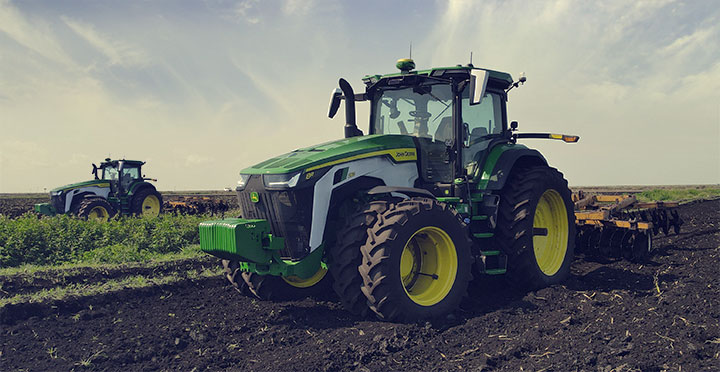
In seasonal operations like certain row-crop farming, where equipment runs only a few weeks per year, it is extremely difficult to justify a full autonomy stack. In contrast, mines that operate 24/7, 365 days a year, with operator costs approaching one million dollars per truck per year, have a very strong business case.
Key considerations for your own operations:
- High Utilization: The more hours per year your equipment runs, the greater the opportunity to amortize autonomy investment.
- High Labor Cost or Scarcity: Environments where skilled operators are expensive or difficult to retain benefit most.
- Measurable Productivity Metrics: Sites that already track tons per kilometer per hour, cycle times, or yard throughput can more easily quantify gains.
Despite clear economic benefits in some sectors, overall adoption of industrial autonomy remains below 3%, even in industries where multiple vendors have proven it works at scale. That gap reflects not a lack of technology, but the difficulty of change in large, risk-averse organizations.
04 Lessons from the World’s Largest Mining Autonomy Deployment
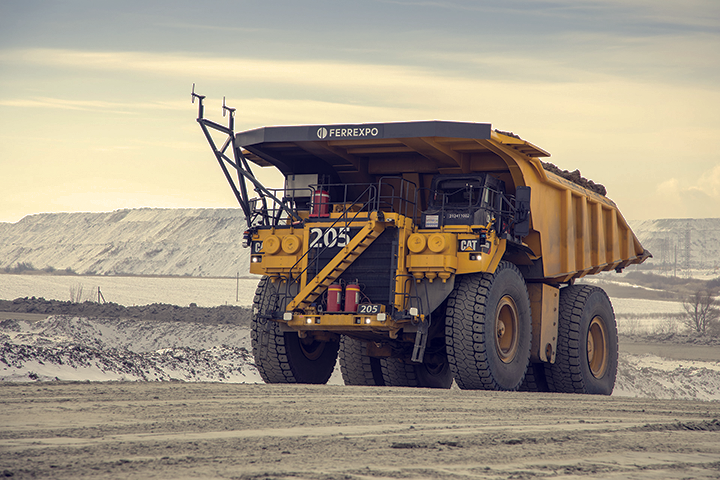
ASI’s largest deployment involved 76 ultra-class haul trucks and roughly 250 auxiliary vehicles—over 300 connected assets—managed as a single ecosystem by our Mobius® software. From a remote operations center located about 1,300 kilometers away, operators oversaw 5-15 vehicles each, handling only exceptions while the system optimized overall flow.

Over a five-year period, this deployment logged approximately 4.5 million kilometers, and 300 million tons moved autonomously, running 24/7. To scale beyond pilot status, ASI was required to beat human productivity by about 5%, achieving 105% of prior tons-per-kilometer-per-hour performance on a consistent basis.
Several lessons from this “monster build” apply directly to any industry considering off-road autonomy:
- The last 10% of performance takes 90% of the time and money. Demonstrating a few trucks in daylight is trivial compared to making dozens of trucks perform reliably in all conditions.
- Operational ecosystems matter more than individual vehicles. Every vehicle on site—from light trucks to service equipment—needed to be connected, visible, and able to influence or halt autonomous operations when needed.
- Remote operations are practical and transformative. Moving operators to a centralized command center improves quality of life, widens the talent pool, and changes the nature of frontline roles.
Mobius is a powerful, OEM-agnostic fleet management system. ASI’s best-in-class platform approach is adaptable to customer needs from full automation to remotely controlled steering, transmission, acceleration, braking, and ignition. With Mobius, a single user can control multiple vehicles simultaneously under the most challenging conditions and from thousands of miles away.
For leaders in construction, logistics, ports, and other sectors, the message is clear: if autonomy can be made safe and productive in such an extreme environment, it can be adapted—carefully—to your own.
05 Building a Scalable Autonomy Platform Across Industries
Our journey began with a single OEM partnership in agriculture, but very early, ASI recognized that true impact required a platform that could move quickly across vehicles and markets.
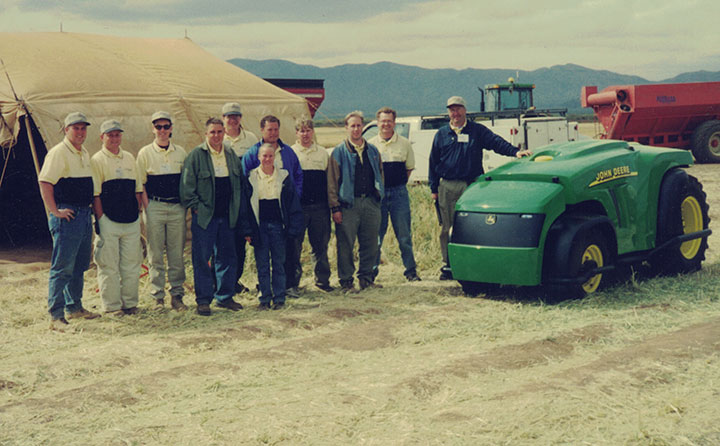
A key step was an IP agreement with our initial partner that granted them rights in their core markets while allowing us to deploy the same autonomy platform elsewhere. That decision forced us to architect for portability and reuse from day one.
For industrial leaders, a scalable platform strategy should include:
- Modular Autonomy Kits: Hardware and software that can be adapted to multiple vehicle types while sharing core components.
- Centralized Command and Control: A single interface that coordinates mixed fleets, not just a handful of homogeneous machines.
- Shared Services: Common HR, safety, training, and support structures that can serve multiple autonomous programs at different maturity levels.
06 Safety, Standards & Partner Selection
In off-road autonomy, a single serious incident—anywhere in your industry, even at a competitor—can delay adoption and erode trust for years. ASI has seen companies destroyed by a single high-profile accident in on-road domains.

To avoid that fate, you need a safety strategy that goes beyond individual machines and considers the entire ecosystem. In mining, we converged on three levels of safety assessment:
- System-level design assessments that consider all interactions among machines, infrastructure, and humans.
- Site-specific hazard analyses that adapt safety measures to local features such as waterways, road layouts, and traffic patterns.
- Change-impact assessments for each new hardware or software release to ensure safe roll-out across hundreds of vehicles and hundreds of people.
From those assessments emerged layered defenses, including:
- Training and standard operating procedures
- Physical perimeter controls and zone management
- In-cab controls for human operators
- Fleet-wide emergency stop capabilities
- On-board obstacle detection and proximity monitoring
- Robust handling of network failures and degraded modes
- Functional safety practices baked into hardware and software design
Equally important is choosing partners—customers, integrators, and suppliers—who are fanatical about safety. In our mining work, high-performing customers consistently demonstrated rigorous SOPs, continuous training, and strong KPI tracking around safety and productivity. Those traits are predictive of successful autonomy programs across industries.
07 Change Management in 100-Year-Old Industries
Technology is often the easiest part of autonomy; changing how a 50 or 100-year-old operation works is far harder.
ASI has seen both mature and immature customers across regions like Ukraine, Africa, the US, and Australia. Successful adopters shared several behaviors:
- Transparent Communication: One mining customer issued a newsletter every two weeks for six years, explaining why autonomy was being introduced, how jobs would change, and how people would be up-skilled and paid more.
- Incentive Alignment: Bonuses and other rewards were tied directly to successful rollout milestones and KPI targets, countering the tendency toward sabotage that historically plagued new technology deployments.
- Governance and Accountability: Clear expectations around behavior, training completion, and adherence to new procedures reduced variability and accelerated learning.
In contrast, organizations that treated autonomy as an IT project, or a “bolt-on” initiative struggled with resistance, unsafe behaviors, and stalled pilots.
If your industry has a strong culture of “no one ever got fired for sticking with the old way”, plan for change management as a core workstream—not an afterthought.
08 From Pilot to Scale: KPI-Driven Execution
The bridge between a promising pilot and fleet-wide rollout is built from data and disciplined execution. In mining, ASI set a clear threshold: until the autonomous system reached 105% of human performance in tons-per-kilometer-per-hour, full fleet adoption was off the table.
To achieve that, we broke down the operating cycle into its component steps—loading, spotting, driving, backing, intersection navigation, dumping—and measured each phase in detail. Development sprints then focused on specific bottlenecks (for example, reducing the dump cycle time from 5 seconds to 2), with predicted and then measured impacts on overall KPIs.
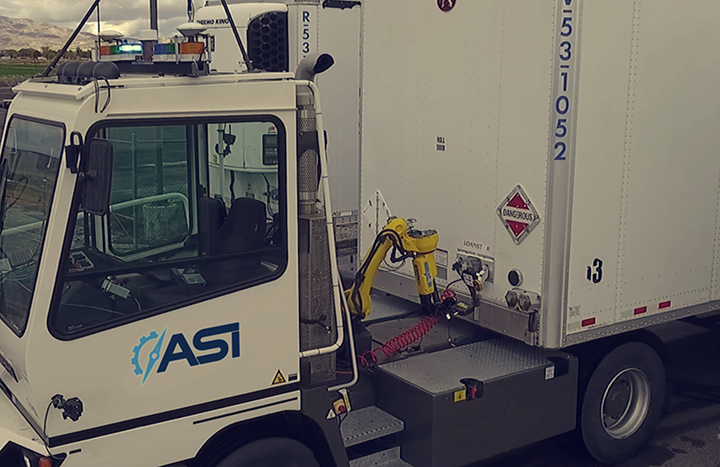
We used a similar approach when deploying autonomous yard trucks for a large retailer, decomposing the trailer move into seeking, hitching, connecting airlines, moving, and docking, then targeting improvements in each phase.
For leaders planning autonomy programs, the implication is straightforward:
- Define a small set of KPIs that matter to your business (e.g. moves per hour, dwell time, throughput, fuel use, near-misses).
- Instrument your operations to measure them accurately pre- and post-autonomy.
- Run development and roll-out in cycles tightly linked to those KPIs, not to a feature checklist.
This approach de-risks scale-up and provides defensible evidence when you take autonomy decisions to your board or investors.
09 Technology & Testing: Designing for Harsh Reality
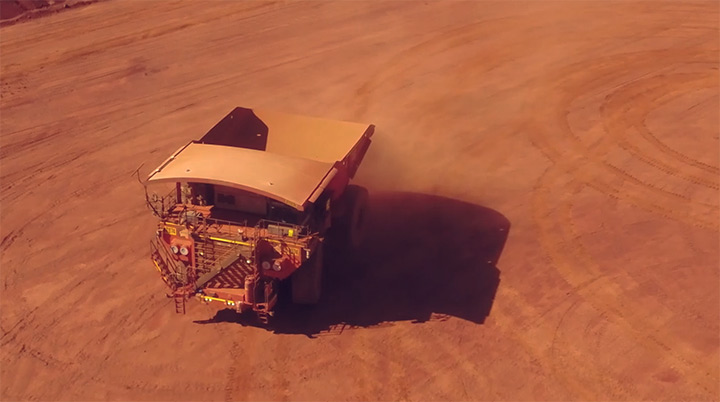
Autonomous off-road vehicles operate in environments that destroy unprepared hardware. Early on, ASI discovered that automotive-grade sensors deployed in mines had 100% failure rates within a year due to dust, vibration, and weather. That forced us to adopt proactive replacement schedules and more rigorous testing regimes.
Our testing stack evolved into several layers:
- Simulation: Virtual environments to stress-test algorithms and scenarios before touching hardware.
- Hardware-in-the-Loop (HIL): “Trucks on the wall,” where real sensors and computers are wired into simulated vehicle dynamics and mine layouts.
- Proving Grounds: Controlled sites where surrogate vehicles and, when justifiable, large trucks operate under monitored conditions.
- Factory and Site Acceptance: Structured processes for validating systems at the integrator, on calibration pads, in limited field trials, and finally across full fleets.
At one point, ASI’s test environment for scaling to hundreds of vehicles required dozens of servers, pushing the limits of our facility’s electrical capacity and ultimately driving us to cloud-based architectures and digital twins.
The lesson for new adopters is clear: rigorous, representative testing is non-negotiable. Budget and plan for it from the outset.
10 Putting People First in an AI-Powered Future
Much of the public narrative around AI and autonomy centers on job loss and fear. Surveys show substantial portions of the workforce are worried that AI will limit their opportunities or lead to layoffs.

ASI’s experience and our strategy go in the opposite direction. We believe trust is the greatest economic force in the world, and we have seen first-hand how treating people as the primary asset—rather than a cost to be eliminated—creates the discretionary effort needed to conquer the brutal last 10% of an autonomy project.
In mining, remote operations allowed frontline workers to sleep at home, attend their children’s events, and avoid weeks in remote camps. That change in quality-of-life generated enormous goodwill and commitment. At our own company, we aim to build a culture where people would still choose to work with us even if they were financially independent.
Practically, this means:
- Using AI to multiply people’s capabilities, not as an excuse to replace them.
- Making employees owners and sharing the upside as autonomy improves profitability.
- Holding leaders accountable for decisions that preserve trust, even when short-term cost-cutting is tempting.
For industrial CEOs, aligning autonomy initiatives with a people-first philosophy is not just ethical; it is a competitive advantage in attracting and retaining the talent who will make these systems work.
11 Getting Started: A Practical Roadmap for Industrial Leaders
Drawing on lessons from mining, logistics, and other markets, a practical roadmap for implementing autonomous off-road vehicles in your operations looks like this:
-
1. Assess fit and prioritize sites
- Identify high-utilization, high-labor-cost environments where you already track operational KPIs.
- Confirm that safety culture and training capacity exist (or can be built) to support autonomy.
-
2. Select partners and define governance
- Choose a technology partner with experience in large-scale deployments, not just pilots.
- Establish joint safety, KPI, and change-management frameworks from day one.
-
3. Start with a focused, high-impact pilot
- Limit scope to a few well-defined workflows in a single site, with clear success criteria.
- Instrument the operation for before-and-after measurement.
-
4. Invest heavily in communication and training
- Communicate early and often about goals, job impacts, and up-skilling paths.
- Tie incentives to adoption milestones and safety metrics, not just cost savings.
-
5. Scale methodically using KPI driven sprints
- Expand fleets and workflows only after hitting agreed performance thresholds.
- Maintain rigorous safety assessments and testing at each step.
-
6. Leverage AI to simplify operations, not to complicate them
- Use AI to make command interfaces more intuitive, automate reporting, and surface actionable insights.
- Keep core traffic rules and safety constraints firmly enforced in the underlying platform.
Autonomous off-road vehicles are no longer a speculative bet; they are a proven lever for productivity, safety, and workforce transformation in the world’s toughest industries.
For organizations ready to explore what autonomy could mean for their fleets, the next step is a structured discovery and pilot planning process tailored to your specific sites, vehicles, and business objectives.

Mel Torrie
CEO, Autonomous Solutions, Inc.