

[row disablegap=”true”]
[col size=”double”]
 ASI’s Forge robotic platform rolls through a vineyard in California. Forge’s narrow build and powerful pulling capacity make it an ideal technology of the future for specialty crops applications.
[/col]
[col]
Over the past several months, we’ve had a variety of discussions and site visits with farming groups. From these conversations, we’ve identified several key challenges that most growers now face.
ASI is working to redefine the term “precision agriculture”
Some of these challenges are more geographical, like the severe drought conditions in the Central Valley of California; and some challenges are felt by all, like labor shortages and lower crop margins. Bottom line, the future of agriculture is changing and will continue to change over the next two decades.
[/col]
[col]
Where are we right now?
As growers face the challenges of modern farming, they are turning to technology as a remedy. We saw a variety of new products and features at the World Ag Expo 2014 in February 2014, demonstrating how companies are focusing on advancing existing technologies like “precision farming.” Recent political priorities have caused many government opportunities to dry up for US military contractors, causing them to look for other applications for their products.
In just the past two years, we’ve seen a substantial increase in the use of aerial drones in farming.
[/col]
[/row]
[row]
[more]
[col]
On the ground vehicle side, ASI is working to redefine the term “precision agriculture” through multiple, coordinated robotic vehicles. Farming vehicles coordinate with one another to most efficiently cover fields and prevent collisions with obstacles or other vehicles. OEMs, large farming corporations, and specialty crop growers are interested in vehicle automation technologies to help perform monotonous but critical tasks like spraying, plowing, and mowing.
The Future of Farming
While we don’t have a crystal ball to tell what’s going to happen in the future, we do have more than 13 years of experience in farming vehicle robotics that gives us boots-on-the-ground insight into where technology trends are going.
[/col]
[col]
Volatile weather and warming or cooling trends seem to be hitting all over the world and can affect harvest yields or populations of invasive plant and pest species. As robotics and sensors become more affordable in the coming years, growers will likely lean even more on technology to help them overcome new problems.
For example, some innovative research groups—like Utah State University’s AggieAir—are working with aerial photography and sensors to capture data about trends such as missing nutrients and invasive plant species encroaching on crops.
[/col]
[col]
It’s not a stretch to imagine a farming operation where the data collected by unmanned aerial vehicles (UAV) prioritizes and directs the task list of an unmanned ground vehicle (UGV) fleet. As UAVs and UGVs work together, they provide targeted herbicide, fertilizer, and water applications that help crops grow more efficiently.
Artificial intelligence systems involving robotic farming vehicles is also on the horizon. In the situation described above, UAVs and UGVs collaborate but may still require some human interaction to make the complex decisions that robots are not capable of.
[/col]
[col]
Artificial intelligence technology may exist in the future that allow a fleet of robots to make decisions, adaptations, and even “learn” based on the data they receive. This type of system would allow farmers to significantly scale up their operations while maintaining their same labor force.
Despite the future possibilities of technology, there will probably never be a time when humans do not have a significant role to play in farming. Robots may make us more efficient and productive or may alter our traditional role, but no technology can replace the ingenuity and intuition of humans in the future of farming.
[/col]
[/more]
[/row]

Clewiston, FL – U.S. Sugar today announced the launch of the largest commercial use of autonomous tractors in the American sugar industry, deploying a fleet of unmanned John Deere tractors across its 255,000 acres of farmland in South Florida. The autonomous fleet is fitted with American technology developed by Autonomous Solutions, Inc. (ASI) and secured […]

Deal brings Scythe Sight® AI vision and M.52 into ASI’s Mobius®-powered portfolio, accelerating sustainable outdoor care Mendon, UT – March 11, 2026: Autonomous Solutions, Inc. (ASI), the worldwide leader of industrial vehicle automation and developer of the Mobius autonomous fleet management system, announces the acquisition of Scythe Robotics, the Colorado-based developer of advanced, commercial-grade autonomous […]

Screening Within the 10th Annual Churros4Change Features Innova and Beeline Collaboration of Bringing Mobility with Robotic Wheelchairs to Guatemala

October 21-23 Event Features Full Fleet Brand Agnostic Autonomy to Offset Labor Shortages and Optimize Productivity for Future Farming
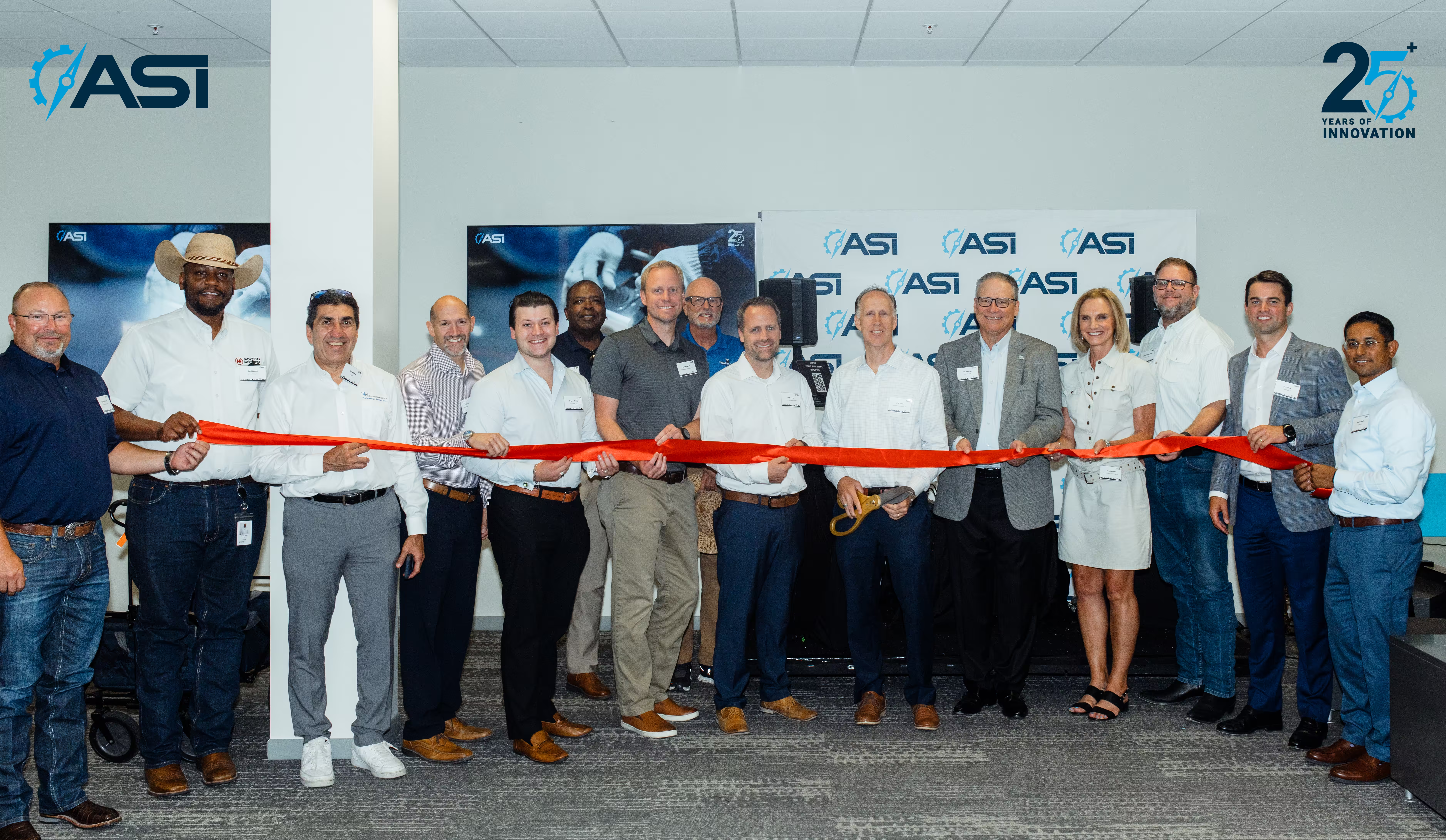
July 30th Ribbon Cutting a Milestone Moment for Autonomous Solutions, Inc. and Its Ever-growing US Footprint

Powered by 25 Years of Expertise, ASI’s Team Builds a Future Where People and Machines Work Smarter Together

Utah-Based “People-Building Robot Company” Employer’s Honor Comes on the Heels of ASI’s Global Expansion and Hiring for UT and TX Locations
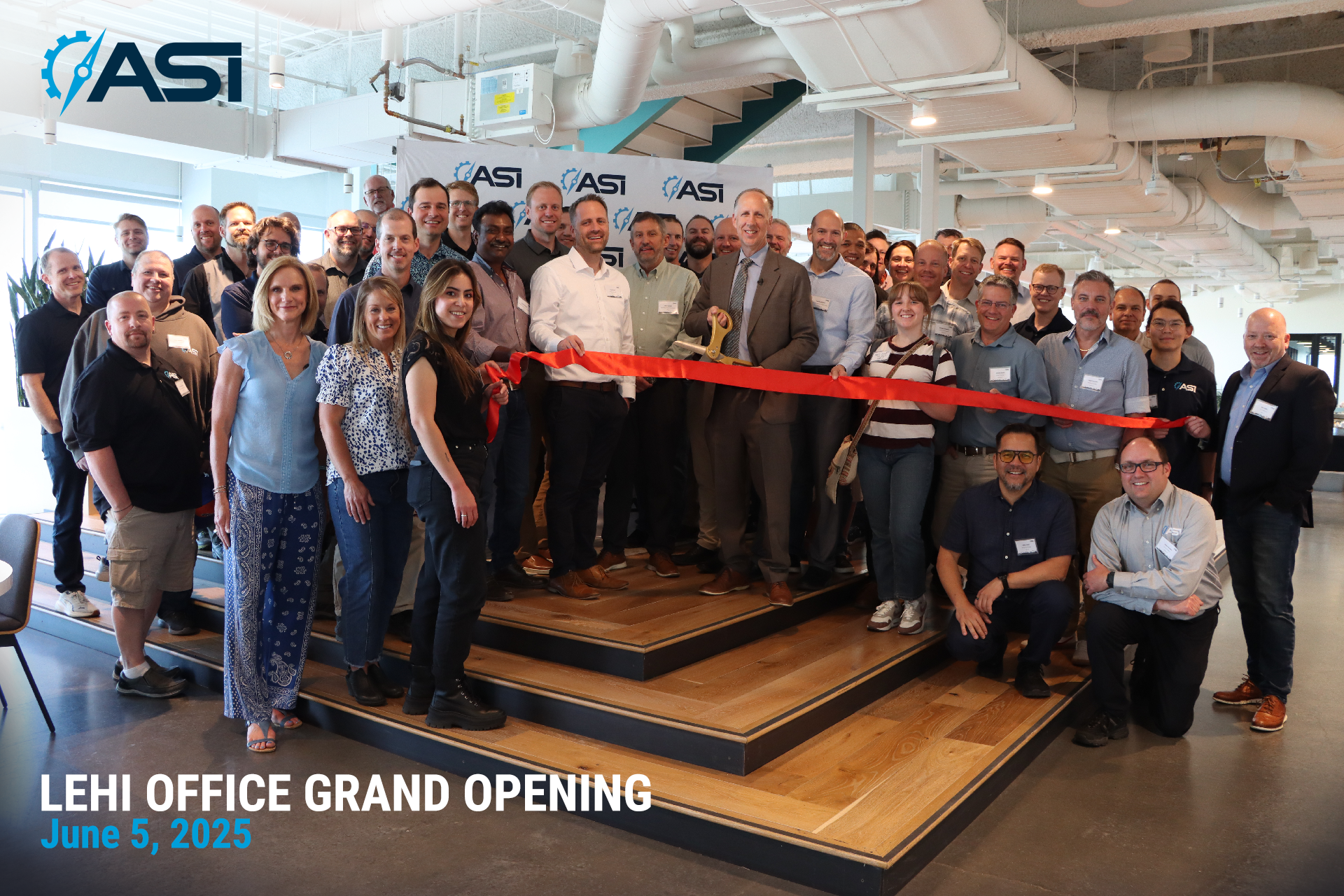
June 5th Ribbon Cutting Exemplifies the Rapid Technology Expansion of Autonomous Solutions, Inc. Within US

ASI expands its Utah presence, leasing WeWork’s largest space at Innovation Pointe

ASI Heavy Construction Will Operate a Fleet of Autonomous Vehicles Using Mobius™ for US-Based Project

Autonomous Solutions, Inc. (ASI) announced that it is shifting its Automotive team from OEM proving ground automation to support its agriculture, construction, landscaping, and logistics sectors. This transition follows the divestiture of ASI Mining, with the capital from the sale enabling a significant expansion in customer deployments. The Automotive team’s expertise in simulation, test automation, […]

Mendon, Utah: Autonomous Solutions, Inc. (“ASI”), a pioneer in the automation of industrial vehicle systems, is pleased to announce the sale of business unit, ASI Mining to Epiroc, a world leader in mining equipment and solutions. Epiroc acquired a 34% stake in ASI Mining in 2018 and will now take full ownership of the company. […]

Along side a world-leading OEM. ASI has developed autonomous technology capable of choreographed testing of ADAS/AV systems. We call this technology SWARMING. Based on studies such as those done by NHTSA, OEMs are finding that using simulation to test, validate, and verify ADAS/AV systems simply isn’t enough. There is a large frequently unaddressed gap in ensuring these vehicles are […]

Autonomous yard shifting uses trucks from different OEMs to perform daily tasks and routines without the need for a driver in the cab. As a result, it offers the ability to oversee and control operations of multiple trucks from a control room onsite, or thousands of miles away. The industry’s most capable and proven command […]

New architecture to increase situational awareness and safety in GPS-compromised environments. [Mendon, UT] Autonomous Solutions, Inc. (ASI) has been awarded a Phase Two grant from the U.S. Army Combat Capabilities Development Command Ground Vehicles Systems Center (formerly TARDEC). Based on the progress achieved during Phase One, ASI was chosen to continue development of a Deep […]

Steadfast automation, where and when you need it, is the cornerstone of what ASI provides. From law enforcement to industrial solutions, robotics cannot be a force multiplier without this level of command and control.

Brian Higgins
Group 77


