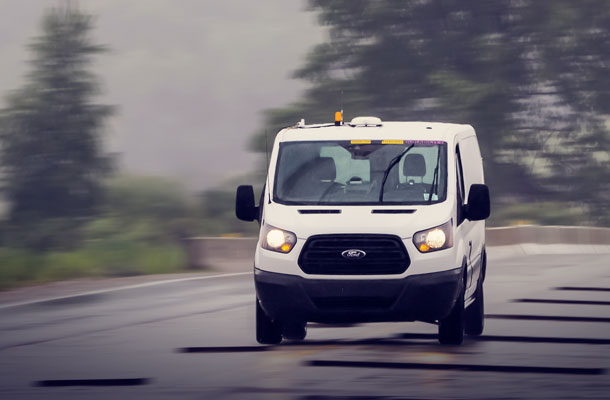
ASI’S SCYTHE ACQUISITION AMPLIFIES AUTONOMOUS OFF-ROAD VEHICLE LEADERSHIP

Read News →

The Role of Mining Vehicle Automation in the Mine of the Future

[row]
[col size=”double”]


Nick Holland, CEO of Gold Fields, one of the world’s largest gold mining firms, recently outlined many of the challenges faced by gold producers
—as well as by miners of most other resources—and discussed the roadmap Gold Fields intends to take to thrive in today’s mining environment.

His address took place at the Future Mining Conference 2015 in Sydney Australia, November 4, 2015.

Holland shared that due to challenges in the recent years such as lower grade of ore deposits, significant global price drops, and cost inflation, “shareholder value [has slumped] by 50-80% since 2007.” With pressures on global commodities, today’s mining industry at large mirrors this trend, though Holland’s presentation provided a dramatic window into just how piercing these pressures have been.

“The gold mine of the future has to be set up, structured, and managed differently from how it is today if it is to remain relevant and value-adding to all its stakeholders,”

Holland concluded.

[/col]
[col size=”double”]

ASI's bell-crank pedal actuation in a robotic ford durability vehicle

[/col]
[more]
[col size=”double”]

Of the solutions to the gold mine of the future posed by Holland, three are of particular interest to the automation industry. In his presentation, Holland suggested that in order to remain competitive the mining industry should improve in the following areas:

  • Embracing digital mining, advanced analytics, and new software technologies
  • Converting conventional mining practices to mechanization and automation
  • Cooperating more closely with OEMs that develop and operate best-of-class technologies and equipment at various levels of automation

Mining automation technologies are becoming more available and affordable for nearly every area of operation, such as: exploration, extraction, transportation of materials, processes automation, software/analytics, etc. In one of these areas, extraction and transportation, automation technology focuses primarily on further mechanizing and introducing remotely controlled vehicles to enhance production and safety. Despite this primary purpose, the software used to direct the efforts of robotic vehicles can also provide a variety of analytic and process benefits.

For example, Mobius command and control software developed by Autonomous Solutions, Inc. (ASI) allows a single operator to control multiple unmanned vehicles. However, as a secondary benefit, Mobius tracks all manned and unmanned vehicles in the mining network, which gives mine administrators access to real-time vehicle locations and enables them to monitor equipment utilization, locate bottlenecks in the production process, and receive notification of maintenance or safety issues.

[/col]
[col]

Mining companies can further combat inflating costs by shifting to unmanned vehicle technologies. Recent numbers released by global mining major Rio Tinto suggest that vehicle automation technologies outperform manned fleets by an average of 12% and can save as much as 500 man hours per year per vehicle by eliminating downtime for shift changes, breaks, and absenteeism. In addition, automation improves safety and enhances the ability to operate equipment at OEM recommended parameters thus facilitating predictable maintenance schedules and decreasing unscheduled maintenance. Remote operators can control more than one vehicle allowing mines to benefit from economies of scale in their labor force.

[/col]
[col]

While Holland suggests a closer relationship with technology and vehicle OEMs that provide automation, mining companies may find this course expensive and restrictive. Closer relationships may involve replacing existing equipment with automation-enabled equipment or signing restrictive single-source fleet contracts.

Third party automation companies may be the most affordable and least restrictive option. Third party companies, like ASI, provide aftermarket automation technologies that retrofit to existing equipment, allowing miners to automate their existing fleet, integrate with existing software and infrastructure, and maintain their flexibility to purchase and automate the right vehicle regardless of the manufacturer.

Talk to an automation specialist today, and explore the benefits your mine could experience with ASI’s vehicle automation technologies.

[/col]
[/more]
[/row]

ASI Robotic Driverless Technology Improves Ford Testing

[row]
[col]

ASI's bell-crank pedal actuation in a robotic ford durability vehicle

[/col]
[col size=”double”]

“Replacing the human element with a robotic system means fewer lost man hours to illness and fatigue as well as better, more cost-effective long-term vehicle testing. The tests, which can put 10 or more years of simulated real-world use on a vehicle in just a few months, are a critical part of the product development cycle and the continued improvements that car manufacturers make to their product lines.”

–Gizmag

[/col]
[col]

Check out the full article featuring ASI’s autonomous technology
[calltoaction title=”On gizmag.com” link=”http://www.gizmag.com/ford-robotic-test-driving-system/40254/”%5D

[/col]
[/row]

ASI’s Driverless Kits at Ford Featured in WIRED Magazine

[row]
[col]

The interior of a robotically controlled ford vehicle

[/col]
[col size=”double”]

How does Ford ensure their vehicles are “Ford Tough?” Part of it is done with ASI’s technology. Ford uses ASI’s vehicle automation kit to perform durability and misuse testing at their proving grounds in Michigan.

Every new vehicle made by any manufacturer is put through rigorous testing that equates to years of use. Some of this testing can put drivers in hazardous driving conditions – imagine driving down a pothole-filled road at 40 mph or worse for hours on end. Due to these conditions, autonomously controlled vehicles can maintain better test results and eliminate the risk of injury while putting more hours and miles on at a much quicker rate.
[/col]
[col]

Check out WIRED’s article with Ford about ASI’s vehicle automation kit
[calltoaction title=”On Wired.com” link=”http://www.wired.com/2015/11/ford-counts-on-soulless-robot-drivers-to-abuse-its-cars/”%5D

[/col]
[/row]

ASI Partners with Ford to Develop and Sell New Robotic Testing Technology

[row]
[col size=”double”]
A ford truck being run through rigorous durability tests using ASI's robotic vehicle automation kit.

A ford truck being run through rigorous durability tests using ASI’s robotic vehicle automation kit.

[/col]
[col size=”double”]

  • Autonomous Solutions Inc. and Ford are licensing robotic vehicle testing technology to other vehicle manufacturers
  • Industry-first technology saves time and spares human drivers from physical abuse by accelerating high-impact on-road and off-road durability testing
  • Patented robotic durability testing used to ensure Ford trucks, including the all-new 2017 F-Series Super Duty, are Built Ford Tough

PETERSBORO, Utah, Nov. 3, 2015 – Autonomous Solutions Inc. (ASI) partnered with Ford to further develop ASI’s software and hardware components that enable autonomous, robotic operation of test vehicles. The industry-first technology saves time and spares human drivers from such physically demanding tasks as driving over curbs and through potholes in durability testing.


Now, other automakers are set to benefit from this technology.


[/col]
[more]
[col]

“We’re proud to work with Ford to help further develop this technology and to be granted a license from Ford Global Technologies for their patented bell crank components,”

said Mel Torrie, CEO, ASI. “The enhancements we’ve made with Ford will improve the durability, reliability and performance of these systems – allowing for even more accurate testing and higher quality vehicles.”


Robotic durability testing includes command and control software as well as a robotics platform installed in the test vehicle that controls vehicle steering, acceleration, braking, transmission, and more. Ford-developed bell crank actuators control the throttle and brake pedals with a metal rod. The module is set to follow a preprogrammed course, and the vehicle’s position is tracked by cameras in a central control room and via GPS accurate to plus/minus one inch.

[/col]
[col]

Through ASI’s Mobius command and control software, operators have the ability to create paths and events for vehicles. An operator can establish repeatable paths that return more precise data results than previously possible due to the robotic platform’s precision.


Robotically driven vehicles are expected to repeatedly perform tests on torturous surfaces at Ford’s proving ground on tracks with names like Silver Creek, Power Hop Hill and Curb Your Enthusiasm. These tests can compress 10 years of daily driving abuse into courses just a few hundred yards long, with surfaces that include broken concrete, cobblestones, metal grates, rough gravel, mud pits and oversized speed bumps.


The innovative technology is helping to ensure the all-new 2017 F-Series Super Duty – Ford’s toughest, smartest, most capable Super Duty ever – is Built Ford Tough. Super Duty has undergone the equivalent of years of abuse and durability testing in a short amount of time to ensure it will hold up to a lifetime of the hard work its owners expect.

[/col]
[col]

Ford has granted a patent license to ASI, providing the company rights to incorporate and use its bell crank components in the systems ASI sells to other automakers and suppliers to test cars, trucks, buses and military vehicles.


“This robotic testing kit is available to purchase directly from ASI immediately,”

said Chris Danowski, director of technology commercialization and intellectual property licensing, Ford Global Technologies. “Several automotive OEMs have already placed orders to purchase systems for their own testing.”

[/col]
[col]

In use since 2013, Ford’s latest generation of bell cranks has seen significant improvements in reaction time and accuracy of the throttle and brake. Patented new design changes simplify installation, resulting in reduced installation time. Other changes enable fewer modifications to test vehicles and improved system performance with better component response. The system can quickly be deactivated, allowing a test engineer to gain control of the vehicle from the driver’s seat.

[/col]

[col size=”full” halign=”center”]

[/col]

[col size=”double”]

About Autonomous Solutions, Inc. (ASI)

Autonomous Solutions, Inc. (ASI) designs and manufactures unmanned vehicle systems, software, and components that are OEM independent. These robotic kits can be leveraged in a variety of industries including mining, agricultural, automotive proving ground, military industries and industrial applications. For over 15 years, ASI has been a leader in vehicle automation. Unlike many robotics firms, ASI has a strong software team which makes up over half of its engineering work force. ASI’s Mobius software allows for command and control of a fleet of vehicles in various industries. ASI has grown to become one of the largest privately held robotics-focused companies in the world. ASI employs a team of world class computer, electrical, and mechanical engineers and support staff at our 100 acre proving ground facility in Northern Utah. For more information regarding ASI and its unmanned vehicle solutions, visit
www.asirobots.com.

[/col]
[col]

About Ford Motor Company

Ford Motor Company, a global automotive industry leader based in Dearborn, Michigan, manufactures or distributes automobiles across six continents. With about 197,000 employees and 67 plants worldwide, the company’s automotive brands include Ford and Lincoln. The company provides financial services through Ford Motor Credit Company. For more information regarding Ford and its products worldwide, please visit
www.corporate.ford.com.

[/col]
[col]

Contacts:

Sam Schembari
Ford North America
313.323.8199
sschemba@ford.com

Eric Budd
Autonomous Solutions Inc.
435.755.2980 x1083
eric.budd@asirobots.com

[/col]
[/more]
[/row]

Autonomous Fleet Outperforms Manned Fleet by 12%

[row]
[col size=”double”]
An autonomous rigid haul truck equipped with ASI's OEM agnostic vehicle automation kit.

An autonomous rigid haul truck equipped with ASI’s OEM agnostic vehicle automation kit.

[/col]
[col ]


Rio Tinto Autonomation Numbers Help Miners Invest in Vehicle Robotics with Confidence

Amidst global economic slowdowns, mining companies around the world have been exploring vehicle automation technology as a way to slash costs and improve efficiency in their operations. However, in the absence of concrete numbers proving the effectiveness of vehicle robotics, experts and critics have battled over its ability to make mining operations safer and more efficient. The wait is over as global mining major Rio Tinto released a variety of statistics that not only demonstrate vehicle robotics is effective but how effective.

[/col]
[col]

Deep in the Australian outback, 1200 miles from the nearest major city, Perth, lies a rich mining region known as the Pilbara.
Rio Tinto and other global mining majors such as BHP Billiton and Fortescue Metals Group (FMG) have established mining sites and infrastructures that ferry minerals from their extraction site all the way to port. The extensive networks include long haul routes that require massive mining trucks to transport loads approaching 400 tons (800,000 lbs).

[/col]
[more]
[col]

For the past several years, Rio Tinto has operated 69 driverless trucks at three separate mining locations, gathering data on productivity differences between driverless and manned sites. The driverless trucks–equipped with vehicle robotics technology allowing a single command station to remotely coordinate and “drive” a network of vehicles–run 365 days a year and 24 hours a day without the need to halt operations for shift changes or other human needs. Each mining truck saves around 500 work hours per year, reports
Australian ABC News.
The ABC article quotes Rio Tinto mining manager Josh Bennett who touted the technology’s repeatability and maintenance benefits as well as decreases in operator training costs.

[/col]
[col]

In another article by
UK’s Financial Times,
Rio Tinto iron ore chief executive Andrew Harding gives more hard numbers.

“Our autonomous fleet outperforms the manned fleet by an average of 12%, primarily by eliminating required breaks, absenteeism, and shift changes.”

Harding continues, “We have also seen a 13% reduction in load and haul costs due to the greater efficiency.”

[/col]
[col]

With the release of these statistics by Rio Tinto, miners can invest in autonomous technology with greater confidence that they will experience long-term productivity gains.

Significant barriers to entry still exist, however, such as the upfront cost associated with committing to automation. OEM providers of autonomy, such as Komatsu and Caterpillar, may require replacement of fleet vehicles or converting to proprietary fleet management systems or infrastructure which may cost more than mining companies can afford.

[/col]
[col]

As a third party provider, Autonomous Solutions, Inc. (ASI) can help to lower barriers to entry by providing an aftermarket automation kit that retrofits to existing equipment and infrastructures. By electing to use ASI’s automation kit, miners are free to experience the long-term benefits of automation while maintaining their existing fleet and reducing conversion costs to fleet management software and communications infrastructures.
[/col]
[/more]
[/row]

ASI Receives an International Safety Audit from HORIBA MIRA

[row]

[col size=”double”]
Safety is ASI's number one priority. Requesting a safety audit from HORIBA MIRA helps ASI evaluate and enhance its internal processes to ensure that rigorous international safety standards are continually in place to be met.


Safety is ASI’s number one priority. Requesting a safety audit from HORIBA MIRA helps ASI evaluate and enhance its internal processes to ensure that rigorous international safety standards are continually in place to be met.

[/col]

[col]

ASI is pleased to have been audited by an external auditor Dr. David Ward of HORIBA MIRA.

ASI engineering processes were reviewed over a period of 4 days this summer and the approach to the functional safety of our products was assessed against a range of international functional safety engineering standards including IEC 61508, ISO 26262, ISO 17757 and ISO 13849.

“It’s a pleasure working with HORIBA MIRA and David Ward.
He’s a professional of the utmost integrity and patience, always pragmatic and extremely knowledgeable in a broad range of sectors including Mining, Security, Agriculture and Automotive where ASI customers are realizing huge savings and productivity improvements through using our products and services,”
says Jonathan Moore, ASI Chief Engineer.

[/col]
[col]

“As autonomous solutions become more widespread in automotive and industrial applications it’s important that we demonstrate their dependability, compliance with functional safety standards is an important aspect of demonstrating a rigorous approach to product design and implementation,”
says Dr. David Ward, HORIBA MIRA.

“It’s encouraging to see a technology innovator embodying these principles as part of their core engineering processes.”

[/col]
[/row]

[row top=”20″]
[more]
[col]

HORIBA MIRA is a highly customer focused world class independent vehicle engineering consultancy.
HORIBA MIRA provides ground breaking engineering innovations and unrivaled testing solutions that change the way people think about the future of whole vehicle and systems technology.

ASI has been working with MIRA for over three years towards the goal of improving the reliability, standards compliance and most importantly safety of our products for all our customers.

[/col]
[col]

“Safety is a top priority for ASI and our customers.
Removing the operator from mining trucks presents a number operational and technical challenges.
Standards like ISO WD 17757 are increasingly important in our ability to ensure we manage risks associated with driverless operation and make these as low as reasonably practicable,”
says Cory Rowe, ASI Mining Product Owner.
“David’s visit has helped ensure that the people and process in place at ASI are world-class and able to demonstrate we have achieved the necessary risk reduction with our autonomous haulage products.”

[/col]
[col]

About Dr. David Ward,
HORIBA MIRA

Dr David D Ward MA PhD CEng CPhys MInstP MIEEE is General Manager of Functional Safety at HORIBA MIRA. He is a leading international expert in automotive functional safety and is the UK Principal Expert to ISO/TC22/SC3/WG16 “Road vehicles – Functional Safety” which has developed ISO 26262. Dr Ward is also the Project Leader for the software requirements of ISO 26262. Dr Ward provides expert support and advice to clients developing safety-related electronic systems and frequently acts as an independent safety assessor.

[/col]
[col]

Recent experience includes safety assessment of “drive by wire” vehicle control systems, smart sensors for industrial control and hybrid powertrain systems.

About HORIBA MIRA

HORIBA MIRA Ltd. is a world-leader in advanced engineering, research and product testing. Over 70 years we have grown into a truly international organisation with facilities located around the world. Our work spans the Automotive, Aerospace, Rail and Defence industries and includes the development of ground-breaking low carbon and autonomous vehicle technologies.

[/col]
[/more]
[/row]

ASI in the News

[row]

[col size=”double”]

An ASI Automated Ford Explorer

[/col]

[col]

ASI was recently in news of The Herald Journal, a Logan, Utah daily newspaper.

Reporters from the Herald Journal visited our headquarters in Petersboro, Utah to speak with ASI, tour our facilities and see some of the latest and greatest that’s going on around here. They talk about our recent growth, award, and ASI in general.


Read their article

to get a local perspective on who ASI is.


Photo: Eli Lucero / Herald Journal

[/col]
[/row]

ASI and Ford’s Robotic Testing Highlighted on TV Show

[row]

[col size=”double”]

ASI Steering Robot on a Ford F-150

[/col]

[col]

ASI’s Automation Kit will be featured on cable TV’s popluar show Translogic.

The episode will air on Velocity some date in the near future,
click the link below to see the clip now.

Translogic producer, Jonathan Buckley, takes a ride in a Ford truck that has no driver. Instead, it is equipped with one of ASI’s automation robots.

[/col]
[col]

Ford uses ASI’s driverless solutions on vehicles at their Michigan proving ground on tracks designed to put vehicles through the toughest of tests. These tests can be abusive on human drivers and there are limits to how long a driver can operate a vehicle on these types of tracks. So using these automation kits for Ford provides safe, accurate, and repeatable results.


See ASI’s Automation Kit in action at the Ford Proving Grounds.

[/col]
[/row]

Autonomous Solutions, Inc. Unveils Expanded Unmanned Vehicle Test Track at Its Headquarters

[row disablegap=”true”]

[col size=”double”]

[/col]

[col]

For Immediate Release


PETERSBORO, UTAH, September 17, 2015 – Autonomous Solutions, Inc. (ASI) announced the completion of facilities expansion involving their unmanned vehicle test track.

This expansion includes a tripling of the test tracks and the creation of more realistic urban scenarios with the needed signage and road striping to develop and test new driverless vehicle algorithms.

“This new facility expansion is critical in the support of our new partners. Our proving ground is a test city, it’s a test mine, it’s a test farm field. We have built into our facility all of these different environments to enable rapid development and rigorous 24/7 product verification and validation testing.”
says Mel Torrie, ASI co-founder and CEO.
[/col]

[col]

“Our proving ground is a test city, it’s a test mine, it’s a test farm field.”

“This facility expansion not only allows us to do more testing, but also provides more office space for the quickly growing engineering team,” says Mr. Torrie.
ASI is currently automating testing for three of the five big automotive companies in Detroit and is expanding into Europe and China with partnerships starting in January. Other markets like Mining, Agriculture, and Construction leverage the same underlying robotics platform foundation but have different “apps” that are customized to the unique needs of each.
[/col]

[/row]

[row]
[more]
[col]

About Autonomous
Solutions, Inc.

For more than 15 years, ASI has been a world leader in unmanned ground vehicle solutions.
[/col]

[col]
From our northern Utah headquarters, ASI serves clients around the world in the mining, agriculture, automotive, military, and manufacturing industries with remote control, teleoperated, and fully automated, coordinated multi-vehicle solutions. We have years of experience automating ground vehicles from various industries.
[/col]

[col]
ASI’s Mobius™ software leverages advanced multi-vehicle command and control algorithms to set up and manage vehicles in varying systems. Mobius increases safety, efficiency, and repeatability.

ASI’s number one priority is safety. Each automation kit safeguards personnel and vehicles with multiple layers of hardware and software safety features.
[/col]

[col]
For more information about ASI visit asirobots.com.

Media Contact

Matt Nielsen
Marketing Manager
435.227.7420
matt.nielsen@asirobots.com
[/col]
[/more]
[/row]

ASI CEO to speak at the 1st World Congress of Robotics in Shenyang, China

[row]

[col size=”double”]


ASI co-founder and CEO, Mel Torrie, speaking at the 2015 RISE Tech Conference in Hong Kong.

[/col]

[col size=”double”]

2015 has been a busy year for ASI.


ASI is pleased to announce that co-founder and CEO, Mel Torrie will be the Keynote speaker at the 1st World Congress of Robotics in Shenyang, China. Focus will be given to keys to success in fielding robotics and lessons that ASI has learned over its 15 years of automating vehicles in industries like mining, agriculture, automotive, and industrial automation.


It has been a busy speaking year for Mr. Torrie, giving presentations at conferences around the world including events in Australia, Germany, China, South Africa, and the UK. Most recently, Mr. Torrie spoke at the RISE tech conference in Hong Kong and he is scheduled to speak in Russia and Egypt before the end of the year.


“There are amazing things happening in the driverless vehicle industry and it is thrilling to visit with people around the world in how we can bring this disruption to a reality”


Be sure to touch base with Mel if you are able to attend one of the upcoming events.


Mel Torrie will be speaking at the

1st World Congress of Robotics

in the Shenyang International Exhibition Center at

[/col]
[/row]