

[row]
[col]
Six months ago, ASI fully adopted AGILE for both software and hardware teams as a way to make processes more efficient and deliver more value to customers. AGILE design processes focus on infusing quality and accountability into development tasks while also giving engineers more flexibility in dealing with unforeseen changes to their original plan.
Richard Netzley, Chief Operations Officer at ASI, recently gave a presentation to a group of masters and doctoral students at Utah State University’s Instructional Technology and Learning Sciences department.
[/col]
[col]
The students, who have been focusing on methods of design, invited Netzley to speak on the benefits ASI has seen from AGILE. The following blog describes ASI’s AGILE installation and reactions to Richard’s presentation.
While most AGILE companies follow a similar framework, the way each company employs AGILE is usually entirely unique to the company. “Each company will really need to take a little different approach and doing so will ensure that the system actually works,” said Michael Doxey, ITLS Master’s student who was present for the discussion.
[/col]
[col]

ASI’s daily routine now involves AGILE standup meetings
The AGILE development process calls for breaking down large projects into smaller deliverable pieces developed over a short time frame.
[/col]
[col]
The short development periods are called “sprints” or “iterations.” With tangible examples at the end of each sprint, customers have an opportunity to provide feedback during the process rather than waiting until the final product is delivered. ASI currently uses two-week sprints with demonstrations concluding each sprint. ASI found that open communication and self-regulation are critical to AGILE. Software and hardware engineers gather for daily standup meetings which provide an open forum to set and discuss daily action plans. According to Netzley, each team member answers three questions:
[/col]
[/row]
[row]
[more]
[col]
During the standup meetings, engineers and managers keep track of daily progress as well as quickly identify and solve obstacles. Planning meetings and end-of-sprint retrospective meetings allow ASI engineers to reflect on what well, what didn’t, and keep the big picture in mind as they prepare for the next sprint.
Along with major process changes came some infrastructure changes too. ASI facilities staff built an entire internal wall dedicated to tracking the AGILE process. “We looked at a lot of software solutions,” said Netzley, “but none of them were able to give us the big picture view of all projects we were looking for.
[/col]
[col]
“Most software applications give you a list of projects, but you can’t see your progress unless you drill into each of them. Our wall tells us exactly where we’re at with everything.”
Benefits
ASI engineers were asking for a process change like AGILE to help them better keep track of their work and progress toward the final goal. Their dedication to the AGILE process is already paying off dividends. “AGILE has already been highly successful for us,” said Netzley. “Back in December, we were three months behind on some of our projects. Now, we’re right where we should be.” Engineers continue to refine the ASI’s style of AGILE by suggesting improvements and modifications each planning meeting.
[/col]
[col]
“Testing is no longer behind schedule,” said Netzley. “In fact, some developers now write tests for our quality assurance team to use during testing which was not something we had time to do before.”
“I was really intrigued by just how much [ASI’s] productivity and product quality increased,” said Anna Strommer, ITLS Master’s student. “It would be difficult to get used that style of management at first, but I think in the end there are some really great benefits to it.”
Looking Ahead
After only six months, ASI has seen drastic improvements in both quality and productivity through the use of AGILE, and looks forward to continued advances.
[/col]
[col]
AGILE’s adaptability allows the same processes to be used in many areas throughout a company. In fact, it can even be used to efficiently run a family! As software and hardware continue to hone their new procedures, other departments are looking toward AGILE as a way to improve as well.
As for the presentation? “I thought the presentation was fascinating,” said Mimi Recker, Department Head of ITLS. “I appreciated the way Richard ‘opened the hood’ to show how ASI chose to implement the Agile process, rather than speaking on a abstract and theoretical level. I also really appreciated that he told us what worked well, and what didn’t work so well—the ‘retrospective’ in action!”
[/col]
[/more]
[/row]
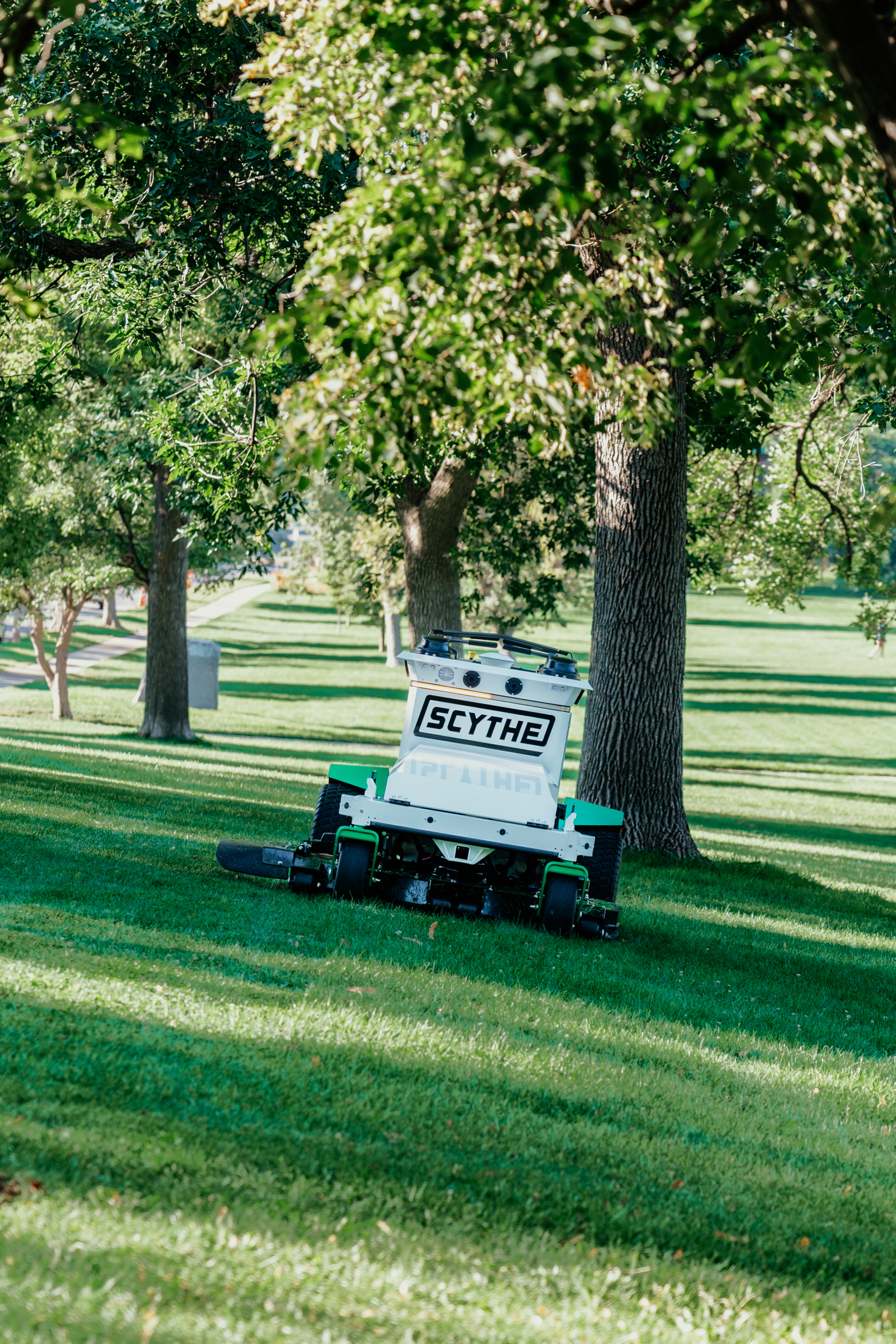
Deal brings Scythe Sight® AI vision and M.52 into ASI’s Mobius®-powered portfolio, accelerating sustainable outdoor care Mendon, UT – March 11, 2026: Autonomous Solutions, Inc. (ASI), the worldwide leader of industrial vehicle automation and developer of the Mobius autonomous fleet management system, announces the acquisition of Scythe Robotics, the Colorado-based developer of advanced, commercial-grade autonomous […]

Screening Within the 10th Annual Churros4Change Features Innova and Beeline Collaboration of Bringing Mobility with Robotic Wheelchairs to Guatemala

October 21-23 Event Features Full Fleet Brand Agnostic Autonomy to Offset Labor Shortages and Optimize Productivity for Future Farming

July 30th Ribbon Cutting a Milestone Moment for Autonomous Solutions, Inc. and Its Ever-growing US Footprint

Powered by 25 Years of Expertise, ASI’s Team Builds a Future Where People and Machines Work Smarter Together

Utah-Based “People-Building Robot Company” Employer’s Honor Comes on the Heels of ASI’s Global Expansion and Hiring for UT and TX Locations
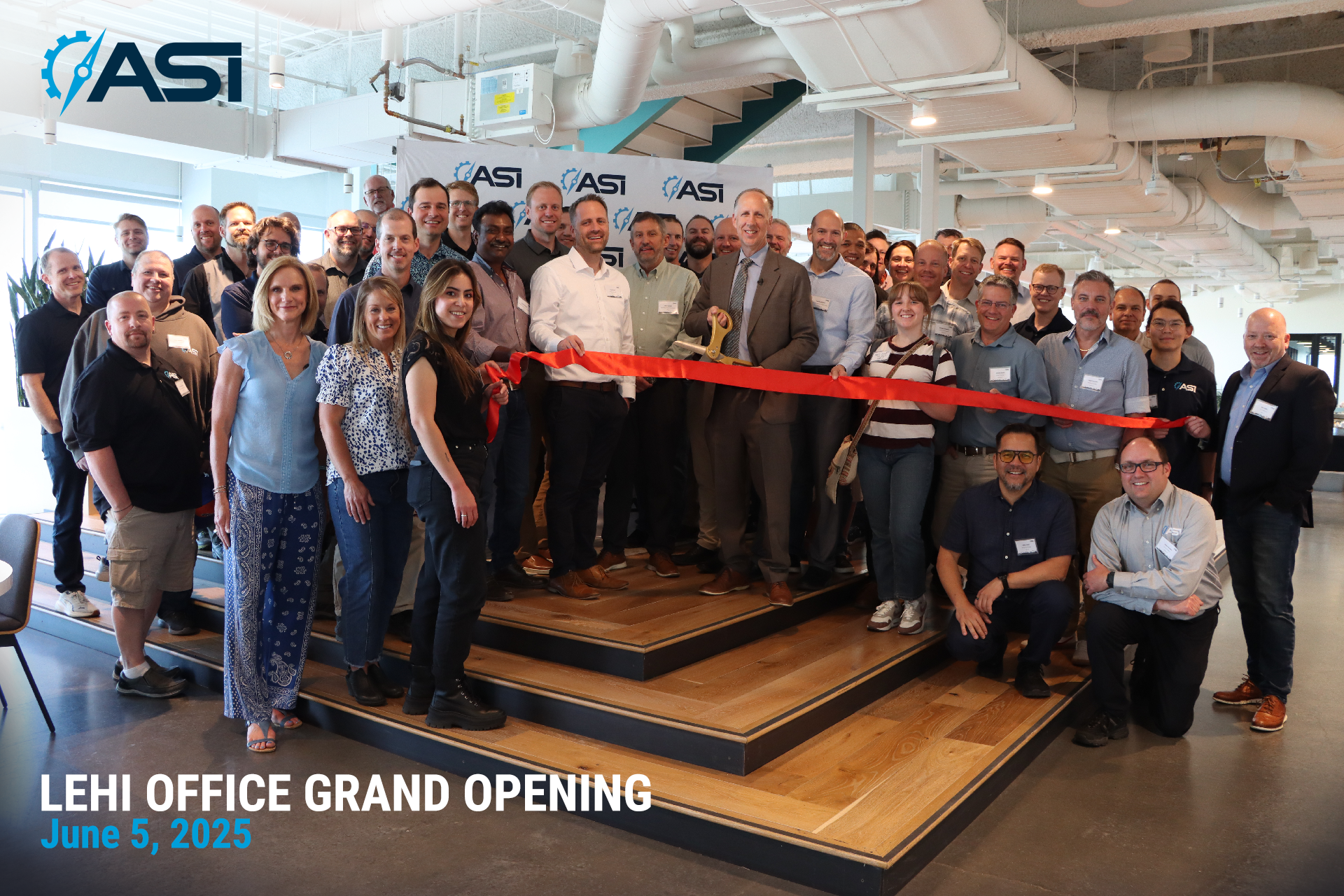
June 5th Ribbon Cutting Exemplifies the Rapid Technology Expansion of Autonomous Solutions, Inc. Within US

ASI expands its Utah presence, leasing WeWork’s largest space at Innovation Pointe

ASI Heavy Construction Will Operate a Fleet of Autonomous Vehicles Using Mobius™ for US-Based Project

Autonomous Solutions, Inc. (ASI) announced that it is shifting its Automotive team from OEM proving ground automation to support its agriculture, construction, landscaping, and logistics sectors. This transition follows the divestiture of ASI Mining, with the capital from the sale enabling a significant expansion in customer deployments. The Automotive team’s expertise in simulation, test automation, […]

Mendon, Utah: Autonomous Solutions, Inc. (“ASI”), a pioneer in the automation of industrial vehicle systems, is pleased to announce the sale of business unit, ASI Mining to Epiroc, a world leader in mining equipment and solutions. Epiroc acquired a 34% stake in ASI Mining in 2018 and will now take full ownership of the company. […]

Along side a world-leading OEM. ASI has developed autonomous technology capable of choreographed testing of ADAS/AV systems. We call this technology SWARMING. Based on studies such as those done by NHTSA, OEMs are finding that using simulation to test, validate, and verify ADAS/AV systems simply isn’t enough. There is a large frequently unaddressed gap in ensuring these vehicles are […]

Autonomous yard shifting uses trucks from different OEMs to perform daily tasks and routines without the need for a driver in the cab. As a result, it offers the ability to oversee and control operations of multiple trucks from a control room onsite, or thousands of miles away. The industry’s most capable and proven command […]

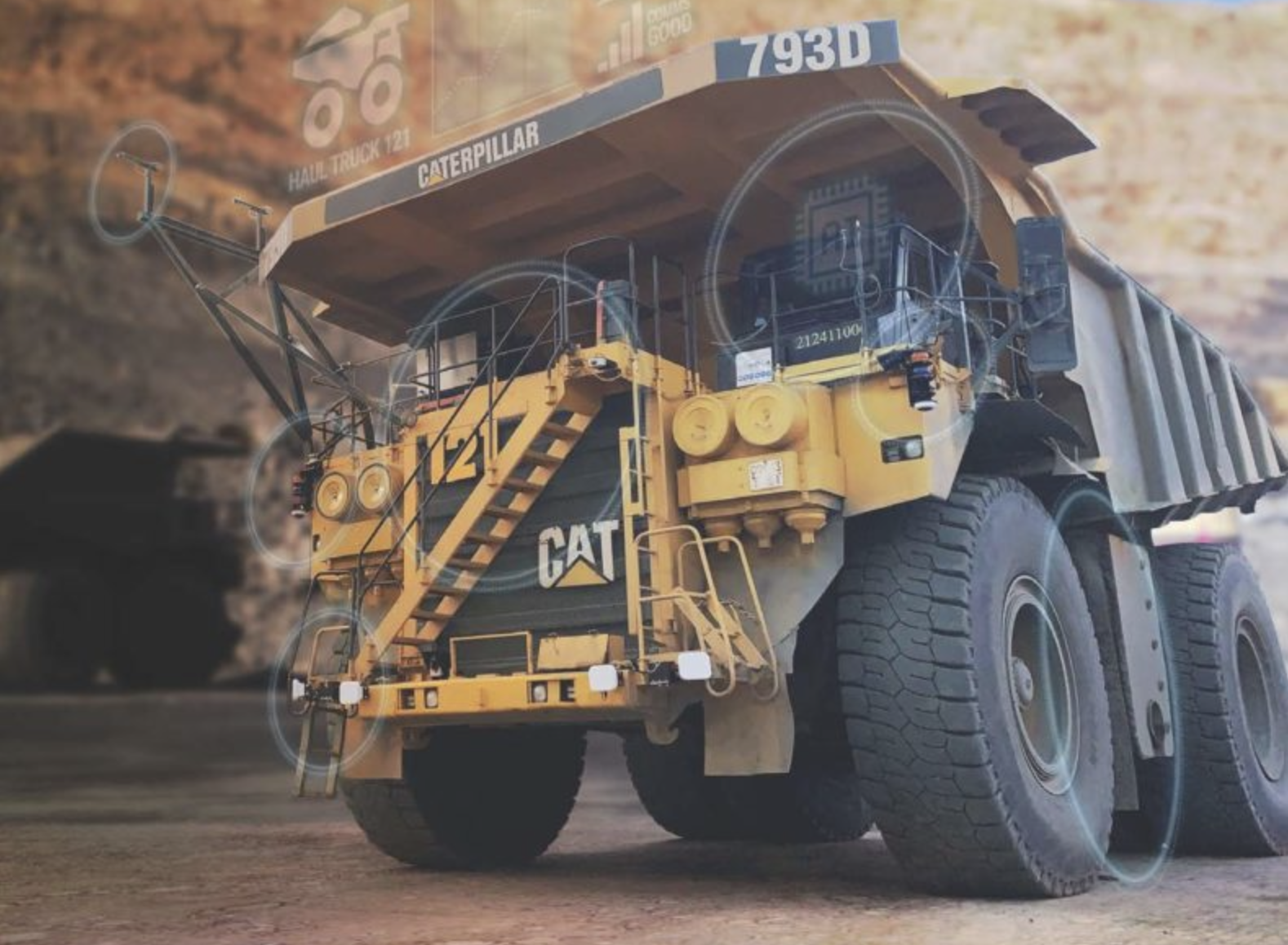
Mendon Utah – ASI Mining and MS4M, a provider of real-time mine management and optimization solutions, have entered into an agreement to ensure compatibility between ASI Mining’s Mobius® Platform and MS4M’s ControlSense® fleet management system (FMS) software for autonomous vehicles. ASI Mining’s Traffic Management System (TMS) is designed to work with a variety of FMS […]

Schedule a demo to see our autonomous solutions in action
Steadfast automation, where and when you need it, is the cornerstone of what ASI provides. From law enforcement to industrial solutions, robotics cannot be a force multiplier without this level of command and control.

Brian Higgins
Group 77


