

[row]
[col size=”double”]

An autonomous rigid haul truck equipped with ASI’s OEM agnostic vehicle automation kit.
[/col]
[col ]
Rio Tinto Autonomation Numbers Help Miners Invest in Vehicle Robotics with Confidence
Amidst global economic slowdowns, mining companies around the world have been exploring vehicle automation technology as a way to slash costs and improve efficiency in their operations. However, in the absence of concrete numbers proving the effectiveness of vehicle robotics, experts and critics have battled over its ability to make mining operations safer and more efficient. The wait is over as global mining major Rio Tinto released a variety of statistics that not only demonstrate vehicle robotics is effective but how effective.
[/col]
[col]
Deep in the Australian outback, 1200 miles from the nearest major city, Perth, lies a rich mining region known as the Pilbara.
Rio Tinto and other global mining majors such as BHP Billiton and Fortescue Metals Group (FMG) have established mining sites and infrastructures that ferry minerals from their extraction site all the way to port. The extensive networks include long haul routes that require massive mining trucks to transport loads approaching 400 tons (800,000 lbs).
[/col]
[more]
[col]
For the past several years, Rio Tinto has operated 69 driverless trucks at three separate mining locations, gathering data on productivity differences between driverless and manned sites. The driverless trucks–equipped with vehicle robotics technology allowing a single command station to remotely coordinate and “drive” a network of vehicles–run 365 days a year and 24 hours a day without the need to halt operations for shift changes or other human needs. Each mining truck saves around 500 work hours per year, reports
Australian ABC News.
The ABC article quotes Rio Tinto mining manager Josh Bennett who touted the technology’s repeatability and maintenance benefits as well as decreases in operator training costs.
[/col]
[col]
In another article by
UK’s Financial Times,
Rio Tinto iron ore chief executive Andrew Harding gives more hard numbers.
“Our autonomous fleet outperforms the manned fleet by an average of 12%, primarily by eliminating required breaks, absenteeism, and shift changes.”
Harding continues, “We have also seen a 13% reduction in load and haul costs due to the greater efficiency.”
[/col]
[col]
With the release of these statistics by Rio Tinto, miners can invest in autonomous technology with greater confidence that they will experience long-term productivity gains.
Significant barriers to entry still exist, however, such as the upfront cost associated with committing to automation. OEM providers of autonomy, such as Komatsu and Caterpillar, may require replacement of fleet vehicles or converting to proprietary fleet management systems or infrastructure which may cost more than mining companies can afford.
[/col]
[col]
As a third party provider, Autonomous Solutions, Inc. (ASI) can help to lower barriers to entry by providing an aftermarket automation kit that retrofits to existing equipment and infrastructures. By electing to use ASI’s automation kit, miners are free to experience the long-term benefits of automation while maintaining their existing fleet and reducing conversion costs to fleet management software and communications infrastructures.
[/col]
[/more]
[/row]
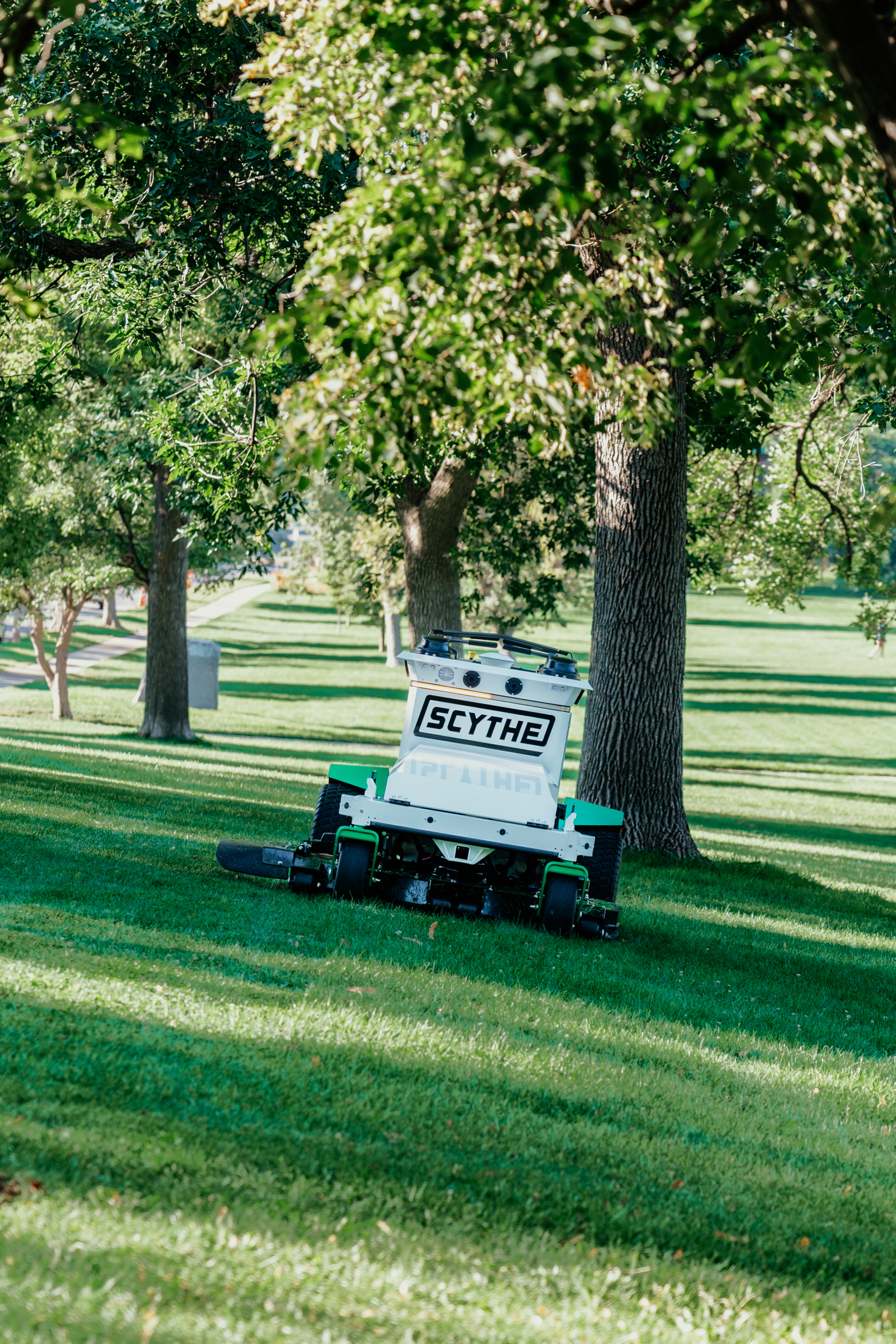
Deal brings Scythe Sight® AI vision and M.52 into ASI’s Mobius®-powered portfolio, accelerating sustainable outdoor care Mendon, UT – March 11, 2026: Autonomous Solutions, Inc. (ASI), the worldwide leader of industrial vehicle automation and developer of the Mobius autonomous fleet management system, announces the acquisition of Scythe Robotics, the Colorado-based developer of advanced, commercial-grade autonomous […]

Screening Within the 10th Annual Churros4Change Features Innova and Beeline Collaboration of Bringing Mobility with Robotic Wheelchairs to Guatemala

October 21-23 Event Features Full Fleet Brand Agnostic Autonomy to Offset Labor Shortages and Optimize Productivity for Future Farming

July 30th Ribbon Cutting a Milestone Moment for Autonomous Solutions, Inc. and Its Ever-growing US Footprint

Powered by 25 Years of Expertise, ASI’s Team Builds a Future Where People and Machines Work Smarter Together

Utah-Based “People-Building Robot Company” Employer’s Honor Comes on the Heels of ASI’s Global Expansion and Hiring for UT and TX Locations
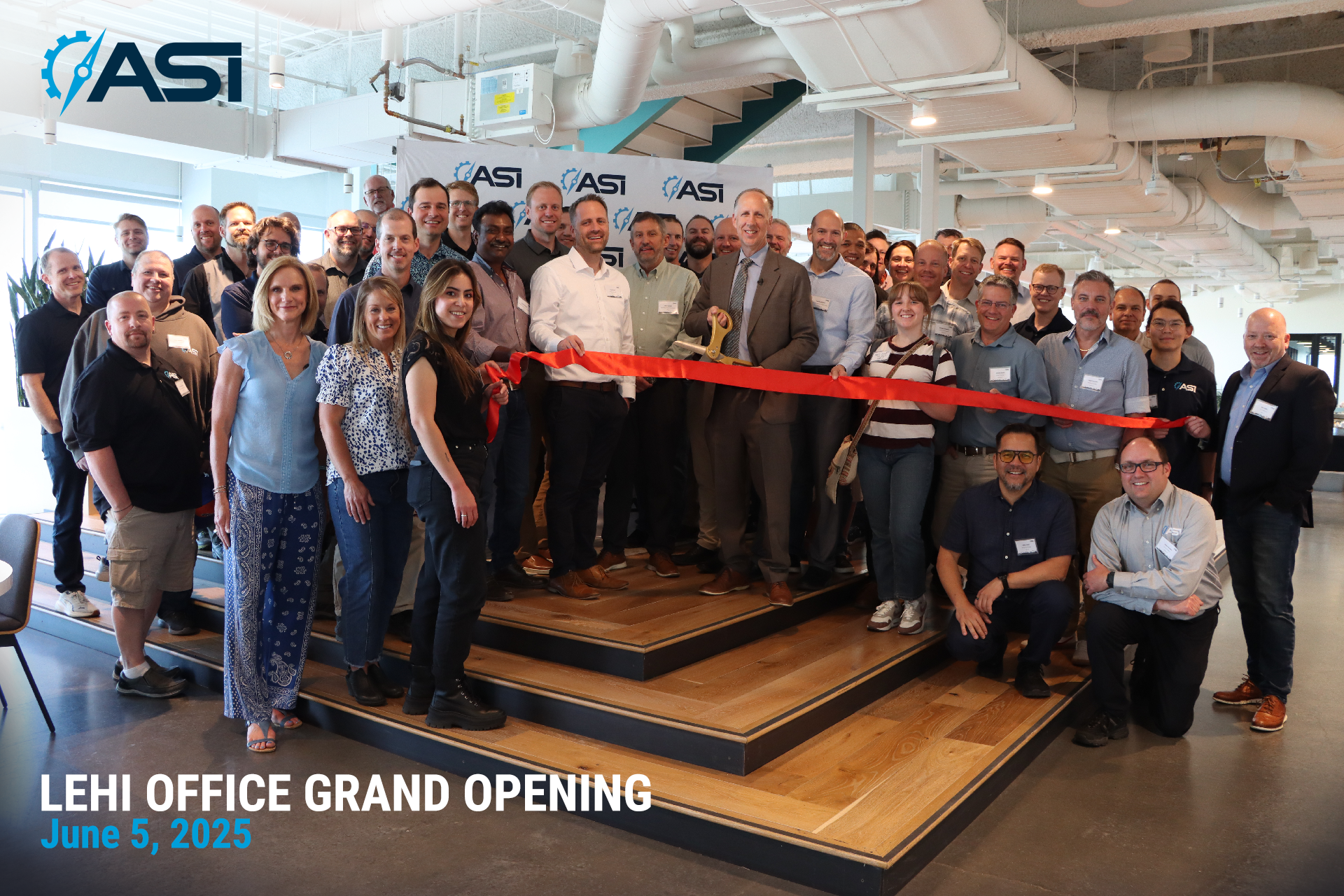
June 5th Ribbon Cutting Exemplifies the Rapid Technology Expansion of Autonomous Solutions, Inc. Within US

ASI expands its Utah presence, leasing WeWork’s largest space at Innovation Pointe
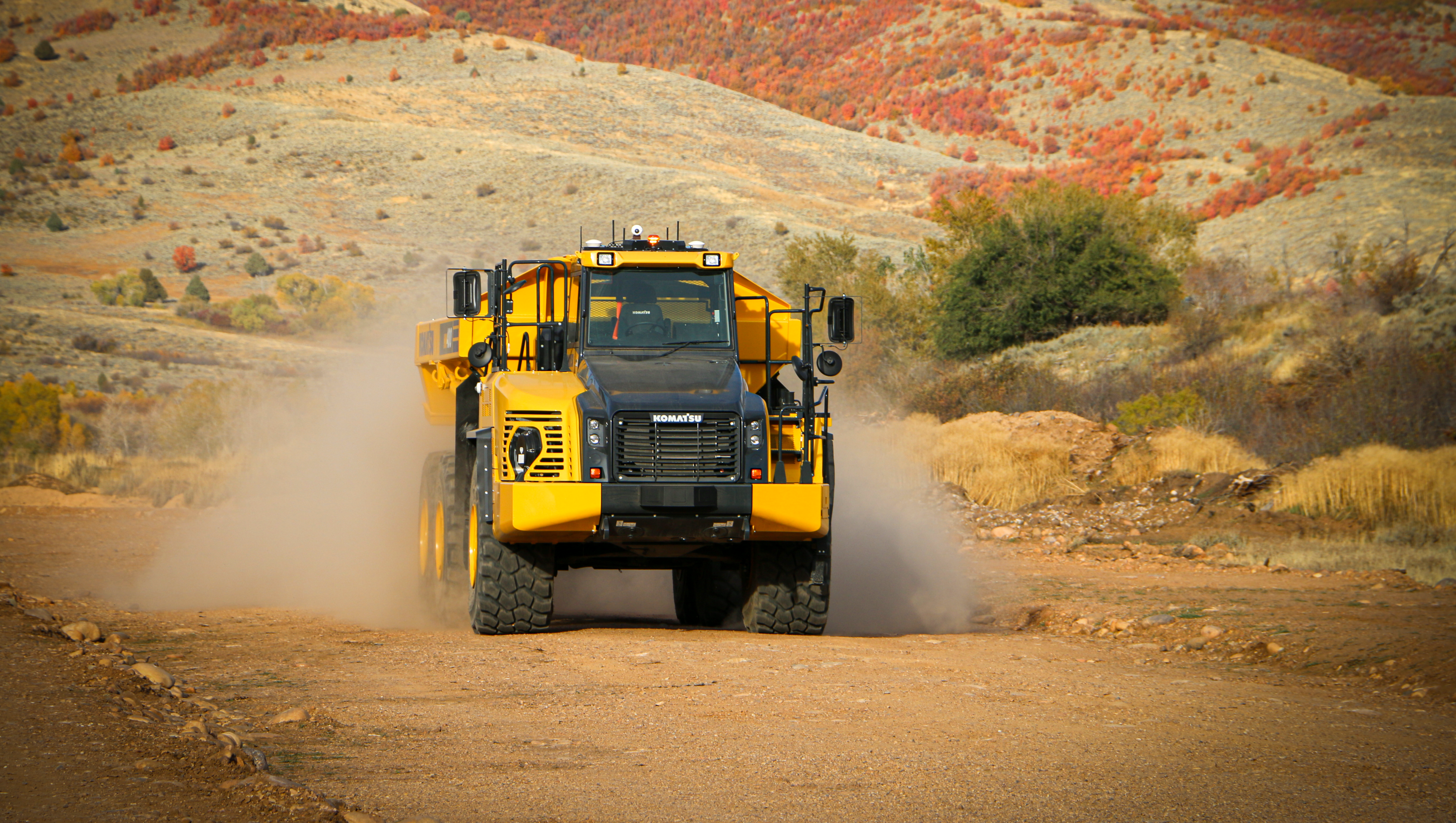
ASI Heavy Construction Will Operate a Fleet of Autonomous Vehicles Using Mobius™ for US-Based Project

Autonomous Solutions, Inc. (ASI) announced that it is shifting its Automotive team from OEM proving ground automation to support its agriculture, construction, landscaping, and logistics sectors. This transition follows the divestiture of ASI Mining, with the capital from the sale enabling a significant expansion in customer deployments. The Automotive team’s expertise in simulation, test automation, […]

Mendon, Utah: Autonomous Solutions, Inc. (“ASI”), a pioneer in the automation of industrial vehicle systems, is pleased to announce the sale of business unit, ASI Mining to Epiroc, a world leader in mining equipment and solutions. Epiroc acquired a 34% stake in ASI Mining in 2018 and will now take full ownership of the company. […]

Along side a world-leading OEM. ASI has developed autonomous technology capable of choreographed testing of ADAS/AV systems. We call this technology SWARMING. Based on studies such as those done by NHTSA, OEMs are finding that using simulation to test, validate, and verify ADAS/AV systems simply isn’t enough. There is a large frequently unaddressed gap in ensuring these vehicles are […]

Autonomous yard shifting uses trucks from different OEMs to perform daily tasks and routines without the need for a driver in the cab. As a result, it offers the ability to oversee and control operations of multiple trucks from a control room onsite, or thousands of miles away. The industry’s most capable and proven command […]

New architecture to increase situational awareness and safety in GPS-compromised environments. [Mendon, UT] Autonomous Solutions, Inc. (ASI) has been awarded a Phase Two grant from the U.S. Army Combat Capabilities Development Command Ground Vehicles Systems Center (formerly TARDEC). Based on the progress achieved during Phase One, ASI was chosen to continue development of a Deep […]
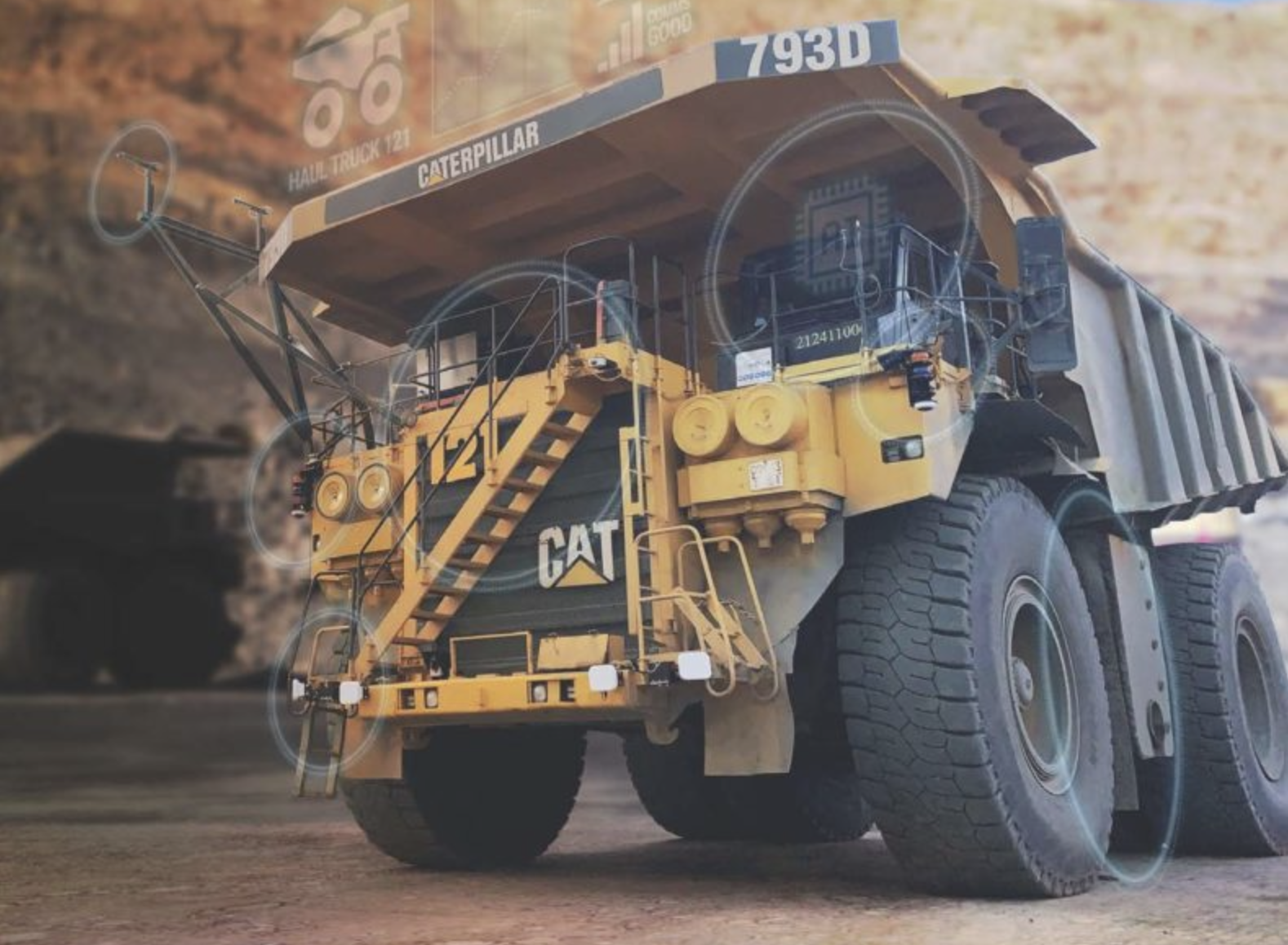
Mendon Utah – ASI Mining and MS4M, a provider of real-time mine management and optimization solutions, have entered into an agreement to ensure compatibility between ASI Mining’s Mobius® Platform and MS4M’s ControlSense® fleet management system (FMS) software for autonomous vehicles. ASI Mining’s Traffic Management System (TMS) is designed to work with a variety of FMS […]

Schedule a demo to see our autonomous solutions in action
Steadfast automation, where and when you need it, is the cornerstone of what ASI provides. From law enforcement to industrial solutions, robotics cannot be a force multiplier without this level of command and control.

Brian Higgins
Group 77


