home/
Press Releases/


[row]
[col]
Imagine, for a moment, the roughest patch of road you’ve ever hit. Jarring potholes, ridiculous speed bumps, loose gravel. Those are all unpleasant experiences for you and your car. When it’s over, sometimes you have to stop, give your dashboard a few strokes, and make sure you and your vehicle are still on speaking terms.
Now add all those obstacles together and multiply by 24 hours a day, 7 days a week, 52 weeks out of the year. For durability testers at the automotive proving grounds in Detroit, Michigan and other areas, that is the norm.
[/col]
[col]
Every day, vehicles from the nearby manufacturing plants of major OEMs are tested for durability and endurance over test tracks designed to stress new vehicles to the breaking point.
Historically, human test drivers have been used for durability and endurance testing, but the physical strain can be severe. Drivers are required to work abbreviated shifts, and some still experience medical issues, disability, or early retirement.
[/col]
[col]
However, as part of an ongoing program with a Big 3 automotive OEM partner, Autonomous Solutions, Inc. (ASI) is paving ground for a new way to perform vehicle testing.
Using on-board vehicle automation technology and state-of-the art navigation software, ASI is pioneering the use of unmanned vehicles for endurance and durability testing with multiple vehicles. Mel Torrie, President and CEO of ASI, discusses the approach that ASI is using to combine unmanned vehicle technology and automotive testing and the benefits:
[/col]
[col]
“When most people think of robotics, they usually think of bomb robots or vacuums, but there are a lot of other successful applications too. Especially when it comes to durability and endurance testing, unmanned vehicles bring many advantages over human drivers. Without even speaking to the health and safety of drivers, autonomous vehicles can operate 24/7 and can consistently reproduce the testing scenarios over and over.
[/col]
[/row]
[row]
[more]
[col]
“Couple this with the ability for one operator to command and monitor many vehicles from a single software interface and now automotive testers have an incredible step change in improved safety, efficiency, and affordability.”
Unmanned vehicle technology is not just for testing on slow, bumpy terrain; it can also handle speed. ASI and its OEM partner recently completed trials of continuous autonomous path tracking at highway speeds exceeding 80 mph.
[/col]
[col]
Through autonomous vehicle control, ASI and its partner hope to keep vehicles moving around endurance and durability tracks 24 hours a day, 7 days a week.
Unmanned vehicle technology provides automotive testers with several immediate and significant benefits. Taking human personnel out of vehicles as they drive and maneuver at dangerous speeds or over jarring terrain decreases the physical burden of test drivers.
[/col]
[col]
As the quality of life for test drivers increases the financial burden of medical benefits, disability, and replacements decreases. Removing humans from the driver’s seat also allows testers to push the limits of the vehicles, performing more rigorous and dangerous tests at higher speeds, for longer periods of time, and without fear of injury.
Robotic vehicle testing also enables computers to recreate exact testing scenarios many times in a row.
[/col]
[col]
“ASI will continue to provide solutions that increase safety and efficiency for our partners,” says Torrie. “Unmanned multiple vehicle testing is not just a wave of the future, it’s a very real and affordable solution today.”
[/col]
[/more]
[/row]


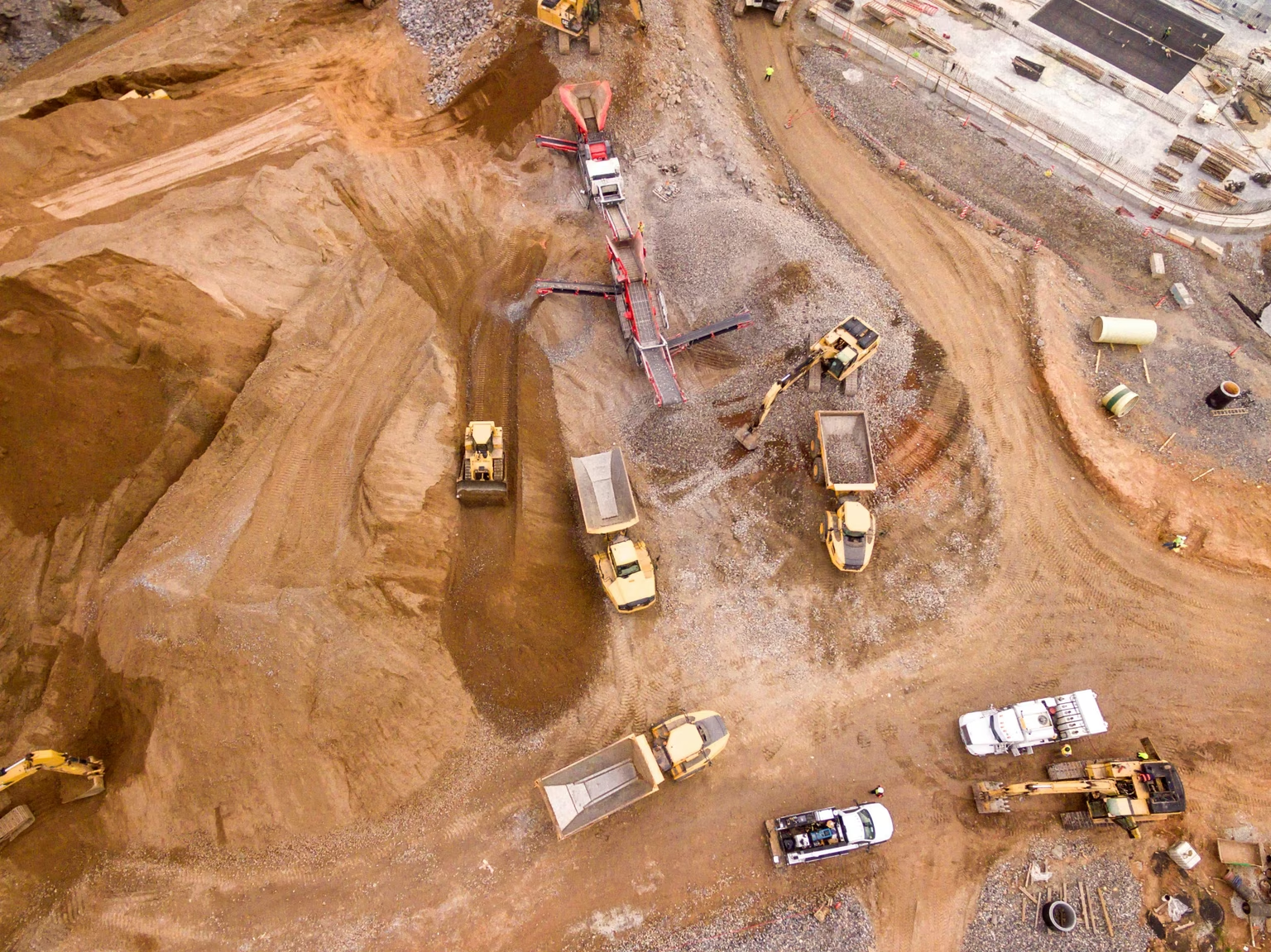
ASI more than doubles office footprint at Hillwood Commons as it advances work at the AllianceTexas Test Center FORT WORTH, Texas – (Oct. 13, 2026) — Autonomous Solutions, Inc. (ASI), the worldwide leader of industrial vehicle automation and creator of Mobius®, the platform that defined Industrial Autonomous Fleet Orchestration (IAFO), is more than doubling its […]

SoftBank Funding Combined with ASI’s 25+ Years of Mobius® Fleet Management Expertise Will Accelerate Commercialization of OEM-Agnostic, Mixed-Fleet Autonomous Solutions for Next-Generation Infrastructure. Mendon, UT – Sept 24, 2026: Autonomous Solutions, Inc. (ASI), the worldwide leader of industrial vehicle automation and creator of Mobius®, the platform that defined Industrial Autonomous Fleet Orchestration (IAFO), has formed […]

ASI’S One Platform, Mobius®, Takes Center Stage by Orchestrating Simultaneous Operations Across Any Brand Mendon, UT – September 02, 2026: Autonomous Solutions, Inc. (ASI), the worldwide leader of industrial vehicle automation and creator of Mobius®, the platform that defined Industrial Autonomous Fleet Orchestration (IAFO), today released a new brand video that puts ASI’s 25+ year […]

The “People-Building Robot Company” is Advancing Automation by Amplifying Human Potential Mendon, UT – July 8, 2026: Autonomous Solutions, Inc. (ASI), the worldwide leader of industrial vehicle automation and creator of Mobius®, the platform that defined Industrial Autonomous Fleet Orchestration (IAFO), for the second straight year has been Certified™ by Great Place To Work®. This […]
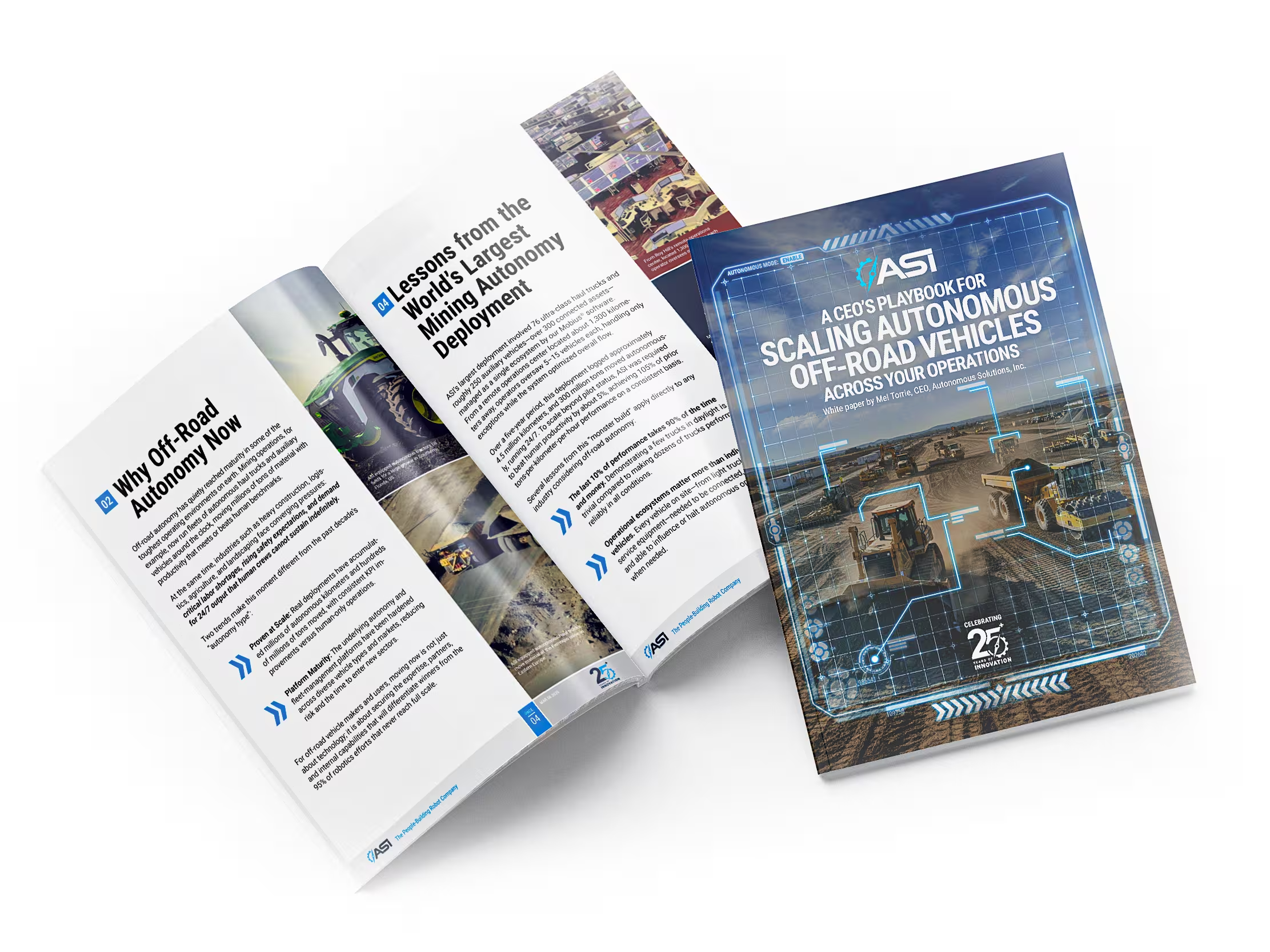
New White Paper Delivers a Proven Roadmap to Move from Pilot to Full-scale Automation Mendon, UT – June 10, 2026: Autonomous Solutions, Inc. (ASI), the worldwide leader of industrial vehicle automation and developer of the Mobius® autonomous fleet management system, announces the publication of a new white paper, “A CEO’s Playbook for Scaling Autonomous Off-Road […]

Clewiston, FL – U.S. Sugar today announced the launch of the largest commercial use of autonomous tractors in the American sugar industry, deploying a fleet of unmanned John Deere tractors across its 255,000 acres of farmland in South Florida. The autonomous fleet is fitted with American technology developed by Autonomous Solutions, Inc. (ASI) and secured […]

Deal brings Scythe Sight® AI vision and M.52 into ASI’s Mobius®-powered portfolio, accelerating sustainable outdoor care Mendon, UT – March 11, 2026: Autonomous Solutions, Inc. (ASI), the worldwide leader of industrial vehicle automation and developer of the Mobius autonomous fleet management system, announces the acquisition of Scythe Robotics, the Colorado-based developer of advanced, commercial-grade autonomous […]

Screening Within the 10th Annual Churros4Change Features Innova and Beeline Collaboration of Bringing Mobility with Robotic Wheelchairs to Guatemala

October 21-23 Event Features Full Fleet Brand Agnostic Autonomy to Offset Labor Shortages and Optimize Productivity for Future Farming
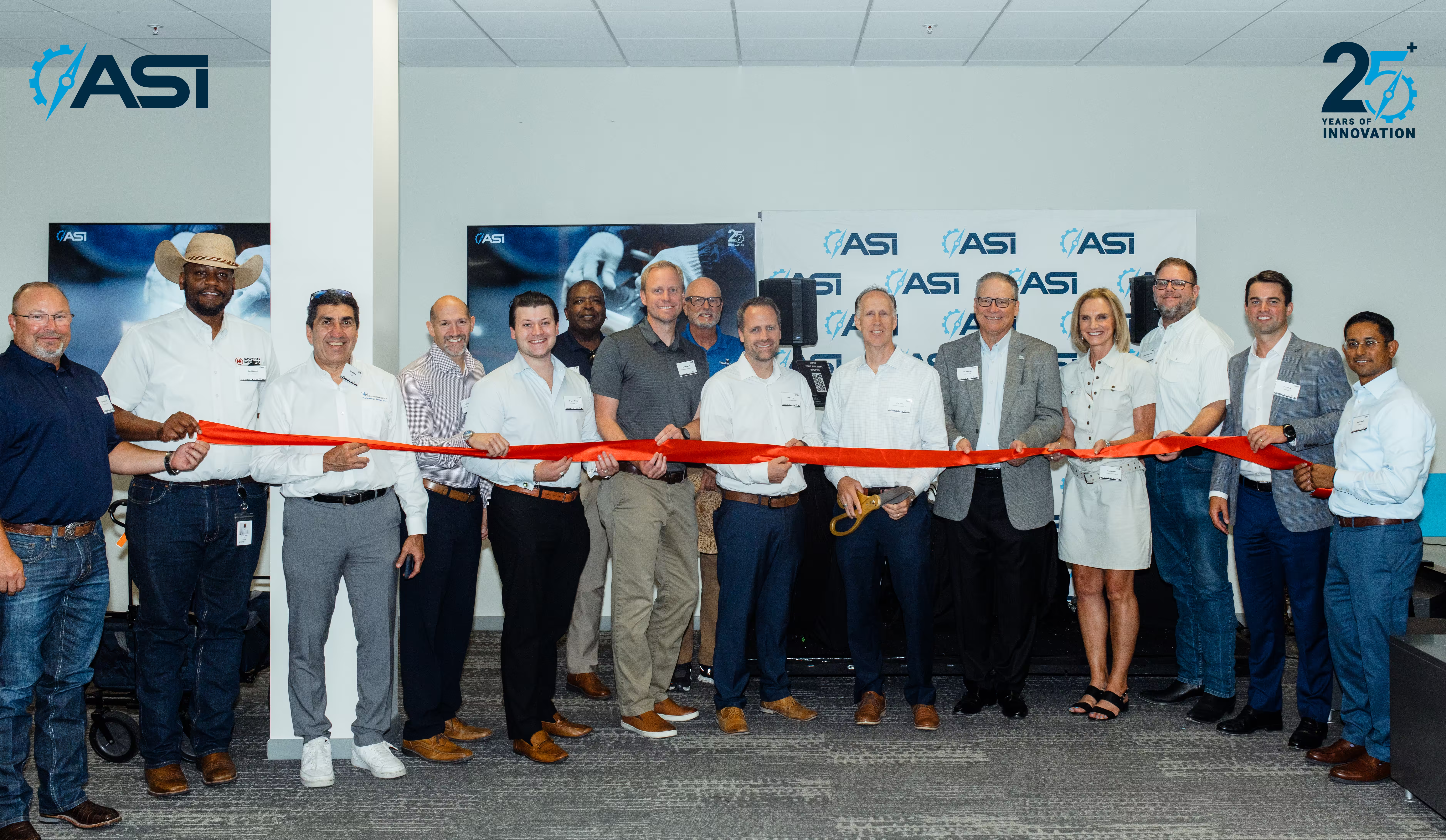
July 30th Ribbon Cutting a Milestone Moment for Autonomous Solutions, Inc. and Its Ever-growing US Footprint

Powered by 25 Years of Expertise, ASI’s Team Builds a Future Where People and Machines Work Smarter Together

Utah-Based “People-Building Robot Company” Employer’s Honor Comes on the Heels of ASI’s Global Expansion and Hiring for UT and TX Locations
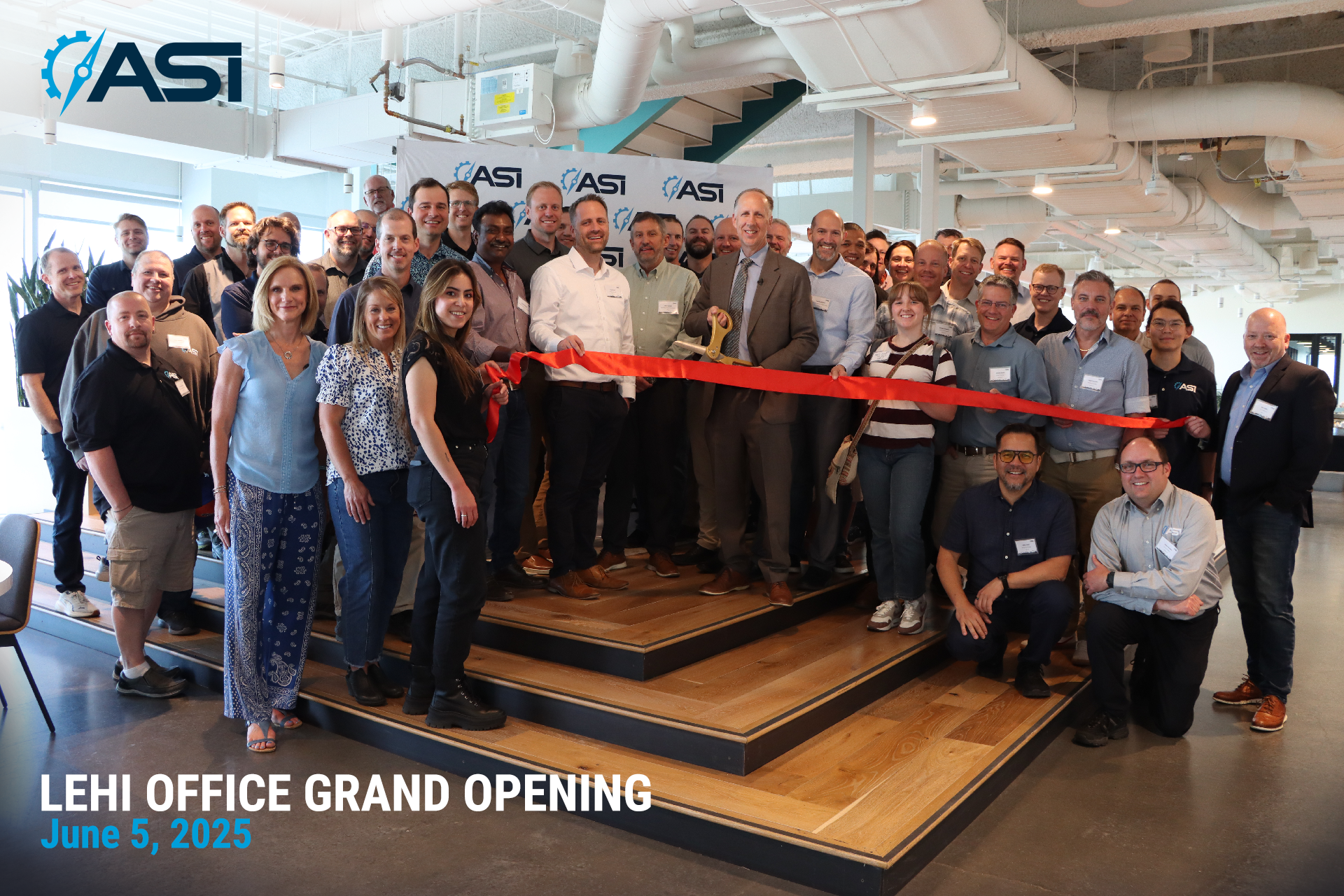
June 5th Ribbon Cutting Exemplifies the Rapid Technology Expansion of Autonomous Solutions, Inc. Within US

ASI expands its Utah presence, leasing WeWork’s largest space at Innovation Pointe


Schedule a demo to see our autonomous solutions in action
Steadfast automation, where and when you need it, is the cornerstone of what ASI provides. From law enforcement to industrial solutions, robotics cannot be a force multiplier without this level of command and control.

Brian Higgins
Group 77

