

[row]
[col]
Are robots stealing jobs from humans? If they are, is it really such a bad thing? The answers are complicated to say the least; in fact, some of the greatest minds in science and business are tackling—and arguing—about the answers. Debate continues to fly around conferences, universities, and the Internet as experts take sides. In January 2013, CBS News’ 60 Minutes aired “Are Robots Hurting Job Growth?” indicating robots in a variety of industries are replacing the human workforce. 60 Minutes sparked emotions and breathed new fire into the debate.
So, are robots really stealing jobs? The short answer is: it depends on who you talk to.
[/col]
[col]
Yes
“Technology is always creating jobs. It’s always destroying jobs,” said Erik Brynjolfsson, Professor of Information Technology at MIT in the 60 Minutes feature. “But right now the pace is accelerating. It’s faster we think than ever before in history. So as a consequence, we are not creating jobs at the same pace that we need to.”
Brynjolfsson continued that the acceleration of technology is moving so rapidly that entrepreneurs and businesses can’t develop the current technologies into new opportunities before the next big breakthrough hits.
[/col]
[col]
In addition, while the economy is recovering, job opportunities are not. “Our economy is bigger than it was before the start of the Great Recession. Corporate profits are back. Business investment in hardware and software is back higher than it’s ever been. What’s not back is the jobs,” said Andrew McAfee, Principal Research Scientist for MIT’s Center for Digital Business, in the 60 Minutes feature.
During the recession, companies used automation to reduce labor costs and sustain productivity. However, even though profits are back and companies again have the option of labor or automation, they’re choosing automation.
[/col]
[col]
No
“You are, of course, seeing that overall, some of the jobs are getting displaced simply because you can use machines to do it,” argued Henrik Christensen, Professor of Robotics at Georgia Tech’s College of Computing, in IEEE Spectrum’s podcast Robots Are Not Killing Jobs, Says a Roboticist.
“There are certain things that we can’t do, where you need higher precision, [or] getting away from heavy lifting. These functions are getting displaced by robots… we’re taking away jobs that humans shouldn’t have been doing in the first place.”
[/col]
[/row]
[row]
[more]
[col]
Christensen also argues that due to the decreased costs associated with automation, domestic production is becoming more competitive with outsourced foreign labor, causing many companies to bring manufacturing back to the United States. “We’ve recently seen Apple promising that they’re bringing back factories. Foxconn is starting a factory in Texas. Lenovo is starting a factory in North Carolina. Tesla is building, or has, a car factory in California, which is where we have the highest labor prices. Through use of automation, they have been able to bring back jobs that before were being outsourced to countries that were primarily in Asia.
“There are some jobs that are going away, that are getting displaced,” said Christensen. “But if you look at the net number of jobs that have been created worldwide, it’s actually going up, it’s not going down.”
[/col]
[col]
What Are We Seeing?
As a robotics company, we often find ourselves in the middle of this debate. While we recognize that robotics technology can displace jobs, we still lean more toward Professor Christensen’s perspective that the overall benefit of robotics is positive. Many of the automation solutions we develop are specifically designed to replace humans, but often it’s for safety reasons, not necessarily to increase productivity or profits. Here are a few examples:
In underground mining, the Chaos™ High Mobility Robot is used to explore blasting areas. Previously, human workers were sent into these highly dangerous areas to look for loose rocks, and some had been injured or killed by falling debris.
Guideline® Robotic Convoy System is being used in active combat zones to replace convoy drivers.
[/col]
[col]
Robotic convoys are able to maintain productivity while reducing exposure of Soldiers to roadside bombs or enemy fire.
In Colorado, ASI automated a drill and bulldozer for a company that experienced a massive landslide at one of their quarries. MSHA, a government agency that regulates mining safety, deemed the ground too unstable for human activity. By using automated vehicles to operate on the unsafe terrain and clear the landslide, the quarry will reopen, saving or creating jobs instead of displacing them.
In automotive durability testing, human test drivers are normally limited to two-hour shifts because of the sheer physical punishment they are exposed to on durability tracks. By automating test vehicles, analysts can still get desired results while eliminating health risks to drivers.
[/col]
[col]
We’re also seeing robotics technology and software used to increase the efficiency and accountability of an existing workforce. For example, with the site analytics features in Mobius™ command & control software, site managers can set benchmarks, compare driver output to benchmarks, and also look for bottlenecks in operations.
Unskilled positions in many industries being consumed by robotics forces the labor force become more skilled. “What we’re seeing is a shift away from unskilled labor to skilled labor,” said Christensen. “That poses a challenge to make sure that we actually have the people that can [be machine operators].” As companies use robotics to remain competitive, opportunities to become robotics operators or for technical training will open up. Workers need to be willing to undergo additional training or risk being left behind.
[/col]
[/more]
[/row]

Screening Within the 10th Annual Churros4Change Features Innova and Beeline Collaboration of Bringing Mobility with Robotic Wheelchairs to Guatemala

October 21-23 Event Features Full Fleet Brand Agnostic Autonomy to Offset Labor Shortages and Optimize Productivity for Future Farming

July 30th Ribbon Cutting a Milestone Moment for Autonomous Solutions, Inc. and Its Ever-growing US Footprint

Powered by 25 Years of Expertise, ASI’s Team Builds a Future Where People and Machines Work Smarter Together

Utah-Based “People-Building Robot Company” Employer’s Honor Comes on the Heels of ASI’s Global Expansion and Hiring for UT and TX Locations
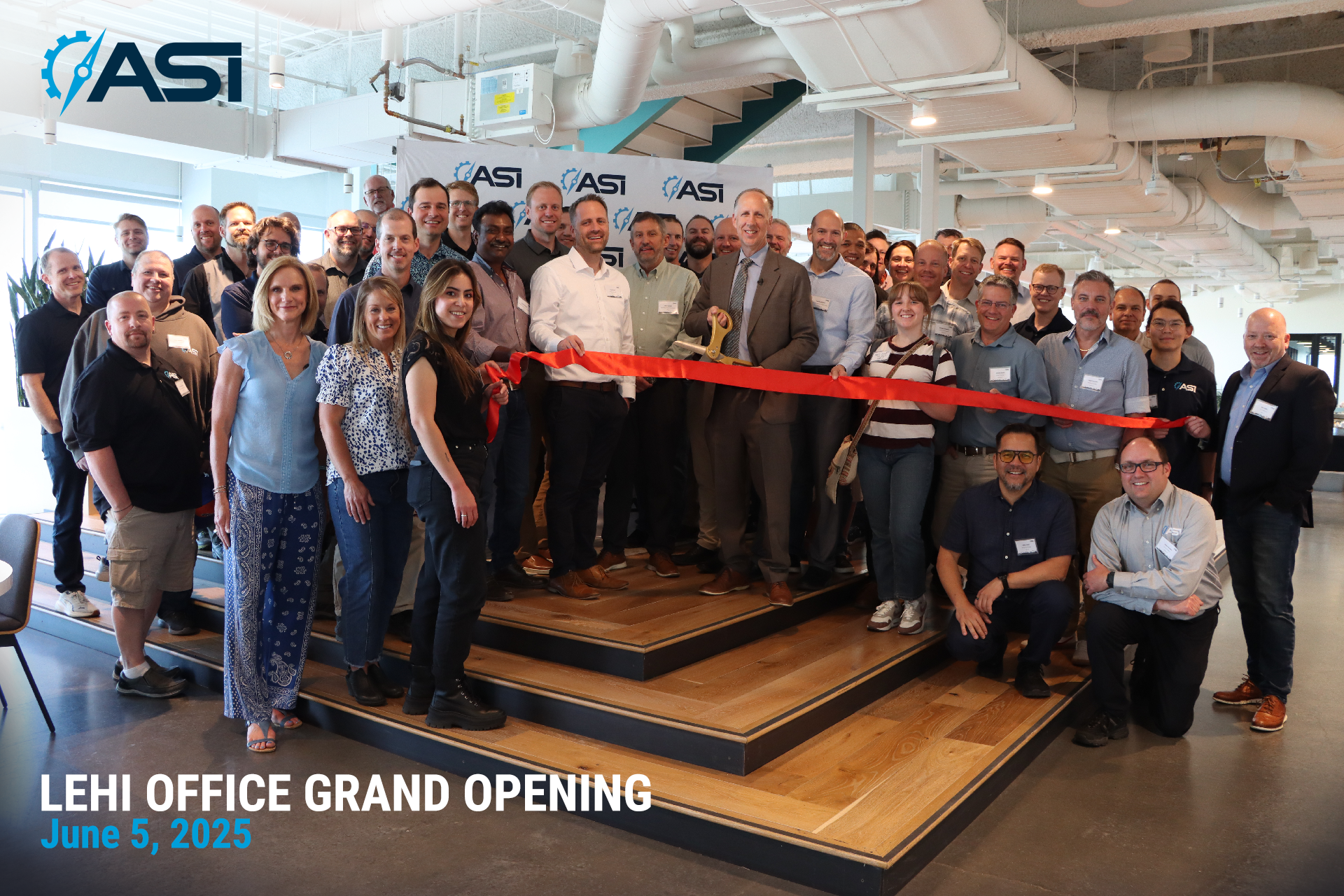
June 5th Ribbon Cutting Exemplifies the Rapid Technology Expansion of Autonomous Solutions, Inc. Within US

ASI expands its Utah presence, leasing WeWork’s largest space at Innovation Pointe
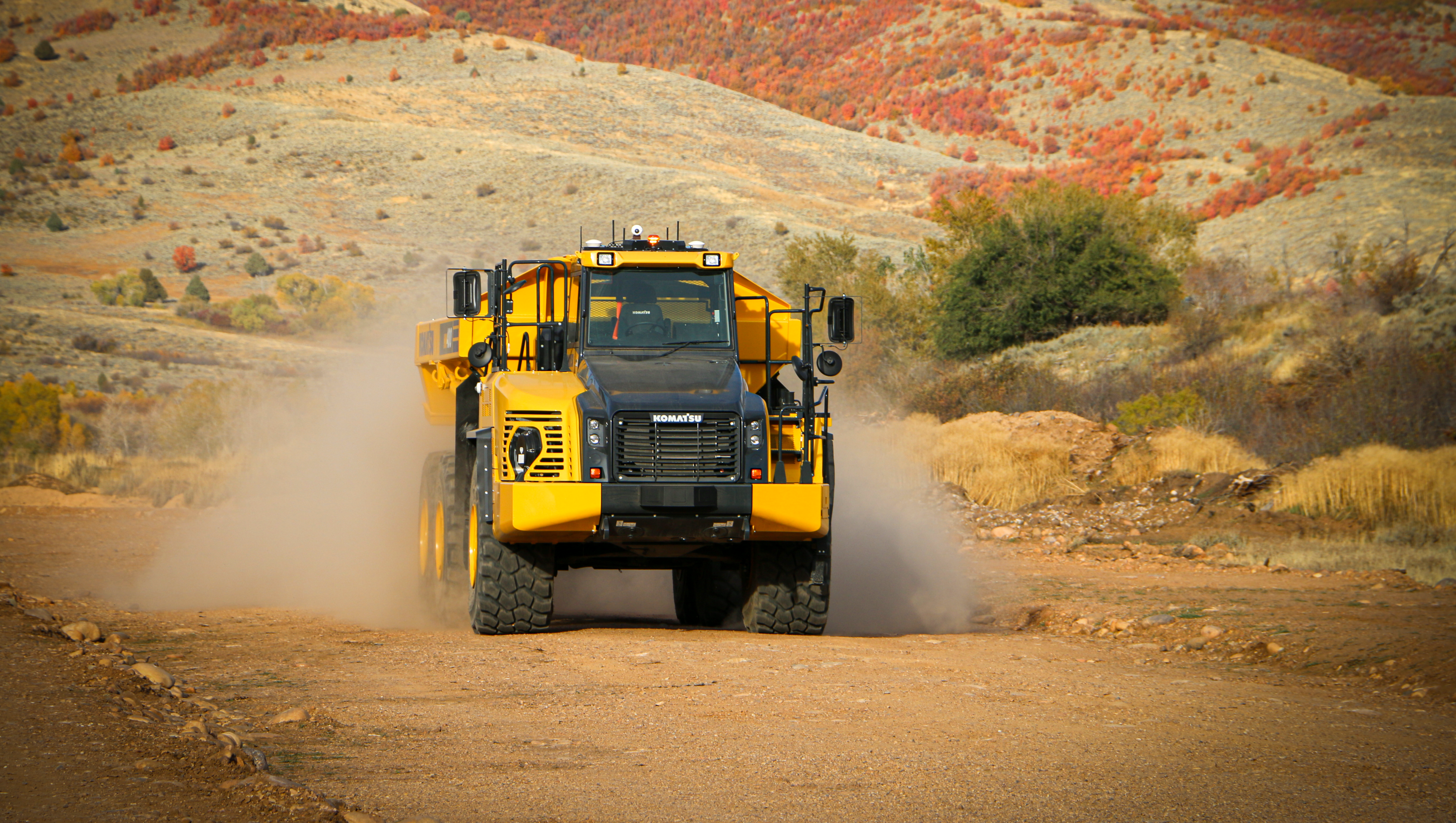
ASI Heavy Construction Will Operate a Fleet of Autonomous Vehicles Using Mobius™ for US-Based Project

Autonomous Solutions, Inc. (ASI) announced that it is shifting its Automotive team from OEM proving ground automation to support its agriculture, construction, landscaping, and logistics sectors. This transition follows the divestiture of ASI Mining, with the capital from the sale enabling a significant expansion in customer deployments. The Automotive team’s expertise in simulation, test automation, […]

Mendon, Utah: Autonomous Solutions, Inc. (“ASI”), a pioneer in the automation of industrial vehicle systems, is pleased to announce the sale of business unit, ASI Mining to Epiroc, a world leader in mining equipment and solutions. Epiroc acquired a 34% stake in ASI Mining in 2018 and will now take full ownership of the company. […]

Along side a world-leading OEM. ASI has developed autonomous technology capable of choreographed testing of ADAS/AV systems. We call this technology SWARMING. Based on studies such as those done by NHTSA, OEMs are finding that using simulation to test, validate, and verify ADAS/AV systems simply isn’t enough. There is a large frequently unaddressed gap in ensuring these vehicles are […]

Autonomous yard shifting uses trucks from different OEMs to perform daily tasks and routines without the need for a driver in the cab. As a result, it offers the ability to oversee and control operations of multiple trucks from a control room onsite, or thousands of miles away. The industry’s most capable and proven command […]

New architecture to increase situational awareness and safety in GPS-compromised environments. [Mendon, UT] Autonomous Solutions, Inc. (ASI) has been awarded a Phase Two grant from the U.S. Army Combat Capabilities Development Command Ground Vehicles Systems Center (formerly TARDEC). Based on the progress achieved during Phase One, ASI was chosen to continue development of a Deep […]
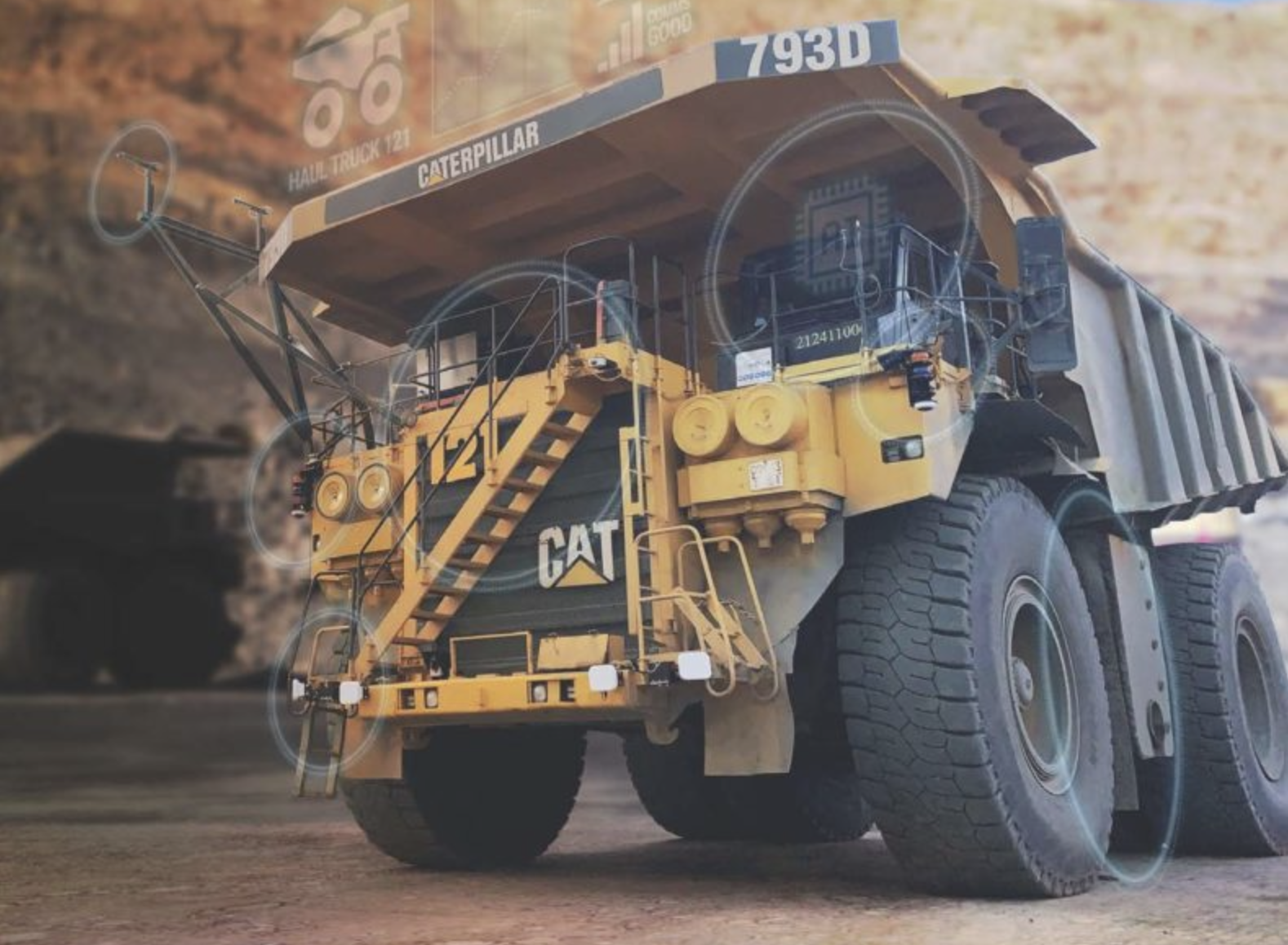
Mendon Utah – ASI Mining and MS4M, a provider of real-time mine management and optimization solutions, have entered into an agreement to ensure compatibility between ASI Mining’s Mobius® Platform and MS4M’s ControlSense® fleet management system (FMS) software for autonomous vehicles. ASI Mining’s Traffic Management System (TMS) is designed to work with a variety of FMS […]

Video of the unmanned yard truck solution: https://youtu.be/vZzrJJknpOU Mendon, Utah; Mountain View, California; and Benschop, Netherlands – A new fully unmanned yard truck solution combines the expertise of four companies: Autonomous Solutions, Inc. (ASI), a world leader in vehicle automation; Phantom Auto, the leading provider of remote communication software for unmanned vehicles; FANUC America Corporation, the […]

Schedule a demo to see our autonomous solutions in action
Steadfast automation, where and when you need it, is the cornerstone of what ASI provides. From law enforcement to industrial solutions, robotics cannot be a force multiplier without this level of command and control.

Brian Higgins
Group 77


